
A Comprehensive Analysis Of Price Movements And Outlook In Toor Market

Summary
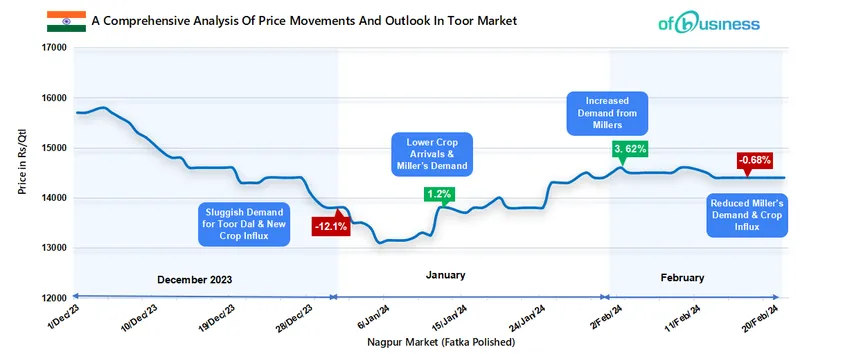
The Toor prices have experienced a shift in momentum in major mandis during the week ending on 17 February 2024, with prices showing a decline after many weeks of consecutive surges. Various factors that are contributing to this trend include cautious miller purchases, weak demand for Toor Dal, and continuous crop influx. Let’s understand the price movements and trends in shaping the Toor market trajectory.
Price Movements
Price movements across major mandis:
- Delhi: In Delhi markets, Lemon Toor prices declined by Rs.50/quintal last week with current prices at around Rs. 10700/quintal.
- Chennai: Last week witnessed Lemon Toor prices in Chennai dropping by Rs. 75/quintal with prices currently Rs. 10350/quintal.
- Nagpur: In Nagpur (Phtaka polished) Toor Dal prices declined by Rs. 100/quintal last week with prices currently at around Rs. 14400/quintal.
Factors Influencing Price Movement
- Cautious Buying By Millers
The recent dip in Toor prices can be attributed to miller’s cautious purchasing patterns. After stocking up in anticipation of further price hikes, millers now face liquidity issues which has led to a slowdown in fresh purchases.
- Weak Demand For Toor Dal
The market is grappling with a lack of demand for Toor Dal, particularly at elevated prices. Reluctance to pay higher prices has impacted the overall demand for Toor Dal, adding to market pressure.
- Continuous Crop Influx & Government Monitoring
The steady influx of Toor from major production hubs has played a major role in declining trends last week. The Consumer’s Ministry has issued warnings against speculative price hikes, underscoring the need for a balanced and fair market.
Import Trends
In December 2023, the import of Toor witnessed a year-on-year decline of 59.3% to 82,103.49 tons. This decline is attributed to decreased imports from Mozambique, Myanmar and Sudan, as indicated by data from the Commerce Ministry.
Market Outlook
In the coming week, Toor prices are expected to remain range-bound. If the Toor prices continue to remain low, farmers may consider holding onto their new stock. This strategy allows them to sell their produce at a profitable rate when prices rise in the future.
OFB’s Insight
The Toor market is currently witnessing a period of volatility, driven by a combination of factors. Expectations are for the Toor prices to remain within a specific range. However, the long-term outlook appears positive, with strong fundamentals supported by a two-year decline in Toor production. As the market adjusts to these factors, strategic decisions by millers and farmers may play a vital role in shaping the Toor market trajectory.


