
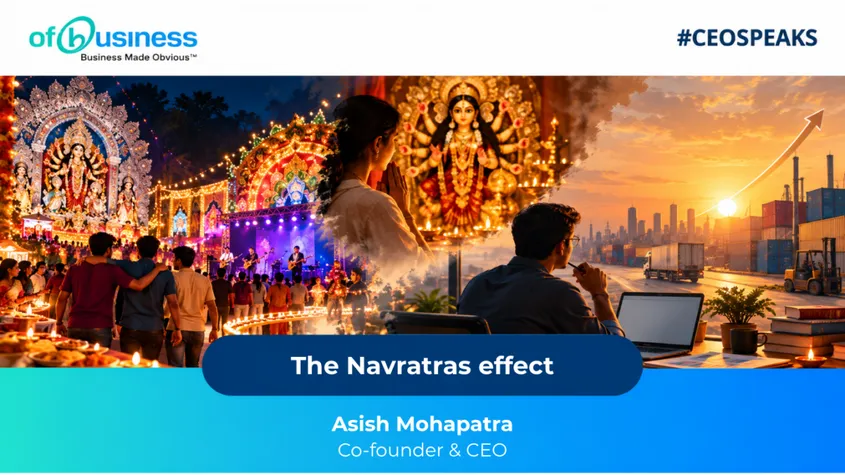
The Navratras effect
My earliest memories of the Pujas dates back to the late ‘80s. Firstly, there was no strict 9-day fasting as such (a custom that took me by surprise the first time I heard). Rather for us in Cuttack, it was supposed to be the time to feast, with families coming back home and celebrating in grandeur.
My second memory was that of the night walks, pandal hopping and orchestras. Pandals were decorated with models of Mother Goddess in their finest (my town was known particularly for the silver filigree ones and boasted of being the 2nd best after Kolkata). Teams of friends and relatives would start walking through the city through the nights of the 7th to 9th Pujas, eating and making merry on the way (mostly with the free food from the pandals). Along with the 100+ pandals in the city, there’d be live orchestras (with mostly Bollywood songs) and open operas to give in a different entertainment flavour. I remember boasting with distinction that I could do 3 full nights walking.
As I grew up and stayed out, the celebrations of east gave away to the austerity and devotions of the rest. It was a time to pray, cleanse and prepare for the business end. In academics, you could have done well up to the mid-terms, but the 2nd half decided. In business, the same. I came across this business phrase, that is so true about @OfBusiness and @Oxyzo today, “Diwali to Holi is kamayi (earning) and Holi to Diwali is khapayi (consumption).” And the Navratras, being 3-4 weeks ahead of Diwali, became the time for planning your 2nd half of the year. And the fasting, pious aura added to the mystic.
It’s always been the time to set goals so that one could just fire from Diwali onwards. I am sure each one of us is onto that planning.
Once an OFBIan, forever one:
Asish Mohapatra

