
Saudi Arabia To Cut Oil Production- Will Oil Sector Suffer?
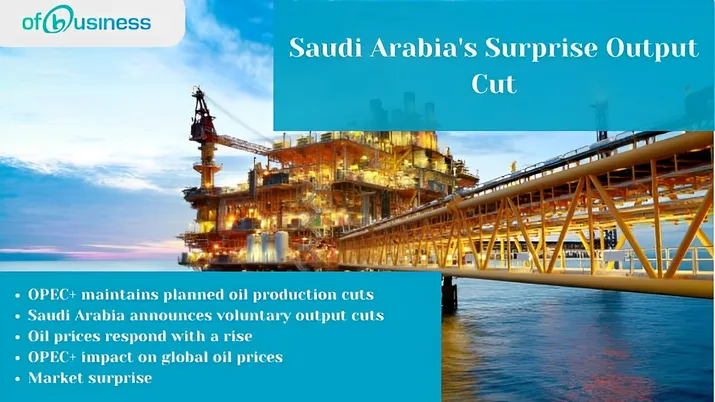
The recent decision by Saudi Arabia, the world’s top oil exporter, to implement an additional voluntary oil production cut of 1 million barrels per day starting July 2023 onwards has sent ripples through the global oil market. This unexpected move, outside of the OPEC+ meeting, has significant implications for oil prices, supply dynamics, and the broader global economy.
Key Implications
Let’s analyze the implications of Saudi Arabia’s decision and explore its potential impact on various sectors and market participants:
- Oil Price Impact: The production cut announcement has immediately lifted oil prices:
- International Benchmark Brent Crude Futures- Trading at $76.57 a barrel, reflecting a 0.6% increase.
- U.S. West Texas Intermediate Futures- At $72.03 reflecting a 0.4% increase.
- This decision highlights Saudi Arabia’s commitment to supporting oil market stability, but it also raises concerns about potential upward pressure on prices in the near term. Investors and consumers alike will need to monitor the impact of higher oil prices on logistics costs, household energy prices, and fuel prices, which can have broader implications for inflation and consumer spending.
- OPEC+ Dynamics & Global Supply: The OPEC+ alliance, accounting for approximately 40% of global crude oil production, had previously agreed to extend existing supply cuts of 3.66 million barrels per day until the end of 2024. The alliance’s decision to lower overall production targets by an additional 1.4 million barrels per day from January 2024 onwards will likely deepen the market deficit and tighten the oil supply. While larger producers are expected to bear the brunt of the cuts, smaller members’ production capacity may remain below their quotas, further impacting global supply dynamics.
- Market Expectations & Investor Opportunities: Market expectations before Saudi Arabia’s announcement were for OPEC+ to maintain current output levels, making the additional production cuts a surprise for investors. This decision highlights the importance of monitoring OPEC+ policy decisions as they have a significant impact on global oil prices and market stability. For investors, the production cuts present both challenges and opportunities. While higher oil prices can pose challenges in tackling inflation and affect various sectors, there may be opportunities for investors who carefully assess the implications and identify high-quality companies that can navigate the changing market dynamics.
- Global Economic Uncertainty: The production cut can be seen as a response to global economic uncertainty and potential drops in international oil demand. Factors such as the ongoing conflict in Ukraine, disruptions in global energy and food supplies, economic alliances, trade uncertainties, and national security concerns contribute to increased risks and potentially higher inflation, creating an unpredictable and dangerous global economic situation.
OFB’s Insight
Saudi Arabia’s additional voluntary oil production cut has introduced a new dynamic into the global oil market. While it aims to stabilize prices and address potential economic uncertainties, its impact on oil prices, supply dynamics, and various sectors remains uncertain. Investors should carefully assess the implications of this production cut and seek opportunities in high-quality companies that can navigate the changing market landscape. As the oil market continues to evolve, vigilance and adaptability will be crucial for market participants to navigate potential challenges and seize investment opportunities.
Read More – Crude Oil Imports In India And China Dips In April 2023: What Does It Mean For The Market?
For real time commodity prices, latest news, and insights, please download the all NEW and all FREE OfBusiness APP.
Suggested Readings
Top LDPE And LLDPE Producers And Suppliers In India, Latest Insights
TL;DR: Top LDPE and LLDPE manufacturers in India are driving a massive shift in the global thermoplastic market, with a projected CAGR of 4.91% through 2033. While Reliance remains the most dominant domestic producer of LDPE, entities like IOCL, OPaL, and HMEL have expanded LLDPE capacities to meet the soaring demand from the e-commerce and

Top 10 Polymer Manufacturers and Companies in India
TL;DR: India’s top polymer manufacturers – Reliance, IOCL, GAIL, OPaL and others – supply PP, HDPE, LDPE, PVC and PET to packaging, construction and auto buyers. Choosing a supplier means matching grade, MFI and BIS certification to your application, not just chasing volume. This guide ranks the top 10 and shows how to source verified,
How to Procure Acetic Acid in Bulk for Manufacturing?
TL;DR: Buying acetic acid in bulk in India comes down to grade, pack size, and supplier compliance. This guide shows MSME and industrial buyers how to compare grades, read price per kg quotes, and vet suppliers before ordering. Follow the seven-step checklist, then request a quote from verified suppliers on OFB. Winter storage tips for