
Aluminium ingots are commonly remelted to make cast parts or intermediate products such as billets and rolling slabs. Foundries may buy alloy ingots for housings and other components. Specify the grade and purchase form based on the first processing step your plant performs.
Metals Shruti Kumari27 Nov 2026
Aluminium Ingot Guide: Production, Grades, Uses and Prices
Shruti Kumari27 Nov 2026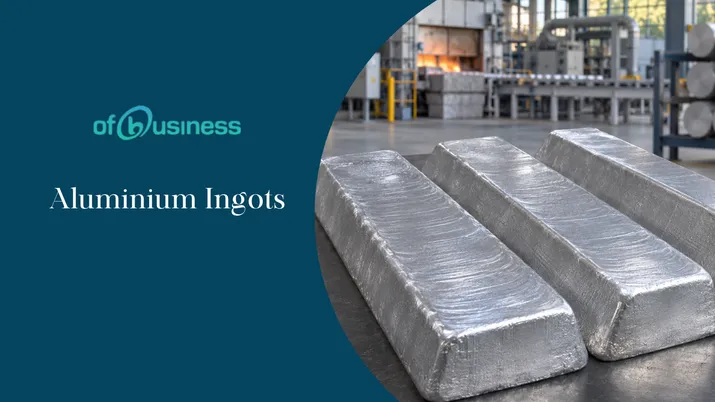
TL;DR: An aluminium ingot is a cast block of metal supplied for remelting, alloying or casting. Choose the grade based on the finished product and buy the form your production line can process. Before ordering, verify batch chemistry, confirm the HSN code and GST treatment, and compare delivered quotes for the same grade, quantity and location.
Aluminium ingot is cast metal supplied for further processing. Foundries may remelt alloy ingots to cast automotive housings. Other manufacturers use ingots as feedstock to produce wire rod, extrusion billets or rolling slabs. This OfBusiness guide helps Indian industrial buyers choose the right form and grade, verify supplier documents and compare landed prices before ordering.
Table of Contents
What Is an Aluminium Ingot?
An aluminium ingot is a solid block of unalloyed aluminium or aluminium alloy cast from molten metal. It is typically supplied for remelting or further processing. Common supply forms include standard ingots, T-bars and sows. The required chemistry and the dimensions your plant can handle should guide the purchase specification.
A foundry with a melting furnace can buy ingots. An extrusion plant that starts at the press typically buys billets. A packaging converter that starts with forming or laminating will generally buy sheet or foil to its own specification. Identify where your production line starts before asking suppliers for a quote.
How Are Aluminium Ingots Manufactured?
Primary aluminium ingot manufacturing starts with bauxite, which refineries convert into alumina. Smelters use electrolysis to produce molten aluminium, which they can then cast into ingots. Secondary production starts with recovered aluminium. Producers remelt the material and adjust its composition to meet the target grade before casting.
| Production route | What happens | What buyers should verify |
| Primary aluminium | The Bayer process refines bauxite into alumina. The Hall–Héroult process converts alumina into aluminium metal. | Grade designation, minimum aluminium content and limits for individual impurities. |
| Secondary aluminium | Producers sort and remelt recovered aluminium. They adjust its chemistry as needed for the specified alloy. | Batch composition, consistency across deliveries and any customer requirements for material origin or recycled content. |
For a die caster, the practical question is whether the ingot meets the approved alloy chemistry and performs consistently during production. Compare usable metal yield and rejection rates alongside the quoted price when qualifying a new source.
Aluminium Ingot Grades and Industrial Applications
Specify the grade by the properties your finished product needs. A general remelting operation may start with primary aluminium. A foundry making housings will typically specify a casting alloy. A producer making electrical conductor material needs a separate specification for chemistry and conductivity.
| Material or application | Typical use | What to check before ordering |
| Primary aluminium ingot for remelting | Base metal for alloy preparation and general engineering | Grade and individual impurity limits. Check IS 2590 where applicable. |
| Aluminium alloy ingot for casting | Gearbox housings, pump bodies and other cast components | Alloy designation and batch chemistry. Check IS 617:2024 where applicable. |
| Electrical conductor grade aluminium | Feedstock for conductor products | Chemistry and conductivity requirements. IS 4026:2023 covers electrical conductor grade ingots, billets and wire bars. |
| Feedstock for extrusion | Metal for casting billets that are later extruded into profiles | Confirm whether your plant needs ingot for its cast house or a billet of the specified alloy and diameter. |
| Feedstock for rolling | Metal for casting slabs that can be rolled into sheet or foil stock | Confirm whether you need ingot, slab, coil or finished foil. Specify the required alloy and dimensions. |
A supplier’s purity figure can help identify a primary ingot. For a casting alloy, ask for the limits and actual batch results for the elements that matter to your approved specification.
Compare Non-Ferrous Metal Listings
What Affects the Aluminium Ingot Price per Kg?
The aluminium ingot price per kg can move with the global aluminium benchmark, domestic availability and premiums for specific grades or forms. Your delivered quote also depends on quantity, freight, dispatch location and payment terms. Compare offers for the same specification and delivery point to see the actual cost difference.
| Price factor | What to check |
| Benchmark and pricing date | If the quote is linked to the London Metal Exchange (LME) or a producer’s price circular, ask which reference and date apply. |
| Grade and form | Match the alloy or purity specification. Check whether the offer is for standard ingots, T-bars or sows. |
| Energy and feedstock costs | Primary smelting uses electricity. Recycled feedstock availability and scrap costs can influence secondary alloy offers. |
| Dispatch and delivery terms | Confirm stock location, freight, dispatch lead time, payment terms and quote validity. |
A warehouse quote and a delivered quote cover different costs. Add the applicable charges to put both on the same landed cost per kg basis. For recurring purchases, record the grade, dispatch point and pricing basis each time you compare offers.
Check Live Aluminium Ingot Prices
What Is the Aluminium Ingot HSN Code and GST Rate?
In India, unwrought aluminium ingots fall under HSN heading 7601. The specific tariff item depends on whether the ingot is unalloyed aluminium or an aluminium alloy. The GST rate for heading 7601 is 18%. Match the product description and grade to the invoice classification before processing the order.
| Product | Indian tariff item | GST rate |
| Unalloyed aluminium ingots | 76011010 | 18% |
| Aluminium alloy ingots | 76012010 | 18% |
If the supplier is quoting billets, wire rods or another form, check the tariff item for that product. Ask for the HSN and GST breakdown on the written quote so your purchase and accounts teams can reconcile it with the invoice.
How Do You Evaluate Aluminium Ingot Suppliers?
Give each supplier the same grade, chemistry limits, ingot form and delivery requirement. Ask who manufactured the lot and whether the supplier can provide a batch test certificate. Once you confirm the material meets your process and customer requirements, compare delivered cost and dispatch commitments.
- Define the requirement. Specify the alloy or purity grade, applicable standard, impurity limits, quantity and acceptable ingot dimensions.
- Verify the manufacturer and batch. Request a mill or batch test certificate. Check the producer, lot number and chemistry against the purchase specification.
- Check handling and delivery. Confirm unit weight, packaging, dispatch point and whether the form fits your handling equipment and furnace.
- Qualify a new source. Use a trial lot when batch chemistry, usable yield or casting quality could affect production.
- Agree on the buying terms. For recurring volumes, compare scheduled supply with spot purchases. Confirm how prices are reset and what happens if a lot fails inspection.
How Can You Source Aluminium Ingots Through OfBusiness?
OfBusiness connects industrial buyers with verified suppliers through its B2B industrial procurement platform. Share the grade, ingot form, quantity and delivery location when requesting a quote.
Explore Aluminium Ingots on OfBusiness
Confirm availability and batch documentation for the offered lot so your team can assess the material and delivery terms before placing a bulk order.
Explore Oxyzo Purchase Finance
Conclusion
Start with your production process and specify the aluminium form and grade it requires. Verify the batch certificate, then compare delivered quotes for the same specification before placing the order.
Frequently Asked Questions
In a typical purchase enquiry, an ingot is cast feedstock intended for remelting. An extrusion billet is a cast form with dimensions and chemistry suited to an extrusion press. A plant with a cast house may buy ingots. A plant that feeds an extrusion press directly usually buys billets.
Secondary ingots can be used when they meet the approved specification and any customer requirements for material origin. Compare batch chemistry, trial results and usable yield before changing the feedstock. For a casting line, use the trial to check whether the material performs consistently in the intended part.
Suggested Readings
Metals
MS Angle and Channel: Difference, Sizes & Weight
TL;DR: MS angle is an L-shaped steel section for bracing and light framing. MS channel is a C-shaped section that carries load across a span. Angles cost less to fabricate, while channels resist bending better. They are not interchangeable. This guide compares shape, weight, size, and cost, so fabricators and contractors can pick the right
Metals
ISMC Size Chart: MS Channel Weight per Meter, Sizes & Uses
TL;DR: MS channels come in standard ISMC sizes under IS 808, each with a fixed weight per meter that determines load capacity and material cost. ISMC 100 weighs 9.56 kg/m; ISMC 150 weighs 16.80 kg/m; ISMC 200 weighs 22.30 kg/m. This guide covers the full size chart, procurement checklist, and how to source verified MS
Metals
Mild Steel: Types, Grades, Properties, & B2B Procurement Guide
TL;DR: Mild steel is a low-carbon steel used across construction, manufacturing, and infrastructure. It comes in multiple product forms, from TMT bars and HR coils to structural sections and wire rods. This guide helps industrial buyers understand grades, select the right product form, and procure verified mild steel through OFB. MS — short for Mild