
Ferrous Scrap Codes Updated: Facilitating Recycling Industry Efficiency

In recent years, the Indian government has been proactive in establishing a framework for the recycling industry, with legislation and other measures put in place to facilitate the same. One key area of focus has been the updating of Ferrous Scrap Codes, a task taken on by the Steel Ministry and BIS (Bureau of Indian Standards).
ISRI Classification And Noteworthy Modifications
To establish a cross-reference between domestic and imported/exported scrap, the Ferrous Scrap Codes follow the classification system of the Institute of Steel Recycling Industries (ISRI). Recent updates to the code have brought about some noteworthy modifications that aim to streamline the ferrous waste recycling process such as:
- Scope Expansion– The standard’s scope has been widened to cover all varieties of ferrous scrap, which are now divided into three categories:
. Home scrap
. Prompt scrap
· Obsolete scrap - Classification– Inclusion of classification based on forms, sizes, and shapes.
- In-Depth Coverage Of Crucial Factors– The code now covers crucial factors including cleanliness, contamination, non-conformity, and safety in greater depth.
- Processing Enhancements– Processing to reduce size/increase bulk density has been included using shredders, slitters, cutters, and balers.
- Introduction Of New Scrap Types– The code now includes brand-new scrap types such as foundry scrap, tyre bead wires, turning-borings, LMS (light melting scrap), bundles of terne plate, bundles for incinerators, bundles of steel cans, automotive scraps (end of vehicle life) and railroad scraps.
Efficiency through the Elimination of Uncertainty and Confusion
The Ferrous Scrap Codes were created to help the industry use ferrous waste as efficiently as possible. The updates to the code are expected to eliminate uncertainty and confusion that could result from varied interpretations of the various scrap grades and terminology used in the ferrous scrap sector.
Insight
The update to the Ferrous Scrap Codes is a positive step toward enhancing the efficiency of the recycling industry in India. With the government taking proactive measures to facilitate recycling, we can look forward to a cleaner and more sustainable future.
Read more: Current Challenges Faced By The Indian Pipe Industry
Suggested Readings

MS Angle and Channel: Difference, Sizes & Weight
TL;DR: MS angle is an L-shaped steel section for bracing and light framing. MS channel is a C-shaped section that carries load across a span. Angles cost less to fabricate, while channels resist bending better. They are not interchangeable. This guide compares shape, weight, size, and cost, so fabricators and contractors can pick the right

ISMC Size Chart: MS Channel Weight per Meter, Sizes & Uses
TL;DR: MS channels come in standard ISMC sizes under IS 808, each with a fixed weight per meter that determines load capacity and material cost. ISMC 100 weighs 9.56 kg/m; ISMC 150 weighs 16.80 kg/m; ISMC 200 weighs 22.30 kg/m. This guide covers the full size chart, procurement checklist, and how to source verified MS
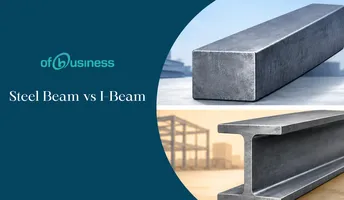
Steel Beam vs I-Beam: Structural Differences Explained
TLDR: Steel beam vs I-beam is a key comparison in construction, affecting strength, cost, and design. This guide explains structural differences, I-beam vs H-beam, beam dimensions, and standard I-beam sizes with charts. Understand steel beam vs I-beam clearly to choose the right section for better load performance and efficient material use. The comparison between steel

