
Sluggish Demand And Declining Prices Challenge TMT Market In India

Currently, numerous challenges primarily due to sluggish demand and a subsequent decline in prices for both primary and secondary mills are affecting TMT market in India. The rolling mills are worried about increasing inventories concern, resulting in downward pressure on prices. In this article, let’s explore more about the Indian TMT market.
Market At A Glance
- Sluggish Market
The TMT market is experiencing a slowdown in demand, which has resulted in a significant price decline. The sluggish demand has made it challenging for manufacturers to secure orders, leading to an over-supply concern. To tackle this issue, manufacturers have aggressively pursued orders in the spot market. However, liquidity issues have compelled sellers to offer lower conversion rates to move their products.
- Distributors’ Conservative Approach
In response to falling prices and market uncertainty, TMT distributors have become cautious. Limited inquiries from infrastructure and construction further contribute to buyer caution, impacting market sentiments. Distributors are adopting a conservative approach while rolling mills prioritize production capacity to avoid supply-demand mismatches, Ofbusiness learned from sources.
Current Prices
- Secondary TMT- The Secondary TMT prices continuously falling since couple of days, however, the market noticed slight fluctuations yesterday. Mid-sized mill’s current offers for TMT in major markets are as follows:
- Raipur: Rs. 48,300/ton (up by Rs. 100/ton)
- Hyderabad: Rs. 52,000/ton (same)
- Delhi: Rs. 52,100/ton (down by Rs. 100/ton)
- Jalna: Rs. 51800 (same)
- Wardha (Sangam TMT): Rs. 49,200/ton
- Primary TMT- Considering the poor demand and sluggish movement of material, Primary mills have reduced their prices by Rs. 500/ton. The current operative prices for primary TMT are as follows:
- Ex-Mumbai: Rs. 55,000-55,500/ton
- Ex-Delhi NCR: Rs. 55,000-55,500/ton
- Ex-Vizag: 53,000-53,500/ton
Note: The above prices are the prices offered by companies directly to the institutional and corporate buyers and retail prices are Rs 1,000/ton more than the prices mentioned above.
Market Outlook
The current outlook for TMT prices suggests a scenario of potential instability or downward pressure. While there is a possibility of relief if there is a shift in demand and positive global market trends, the persistence of sluggish trends could compel mills to take further measures such as reducing prices. This is due to the accumulation of inventories with distributors and plants.
OFB’s Insight
The Indian TMT market faces challenges with sluggish demand, leading to price declines. Limited inquiries, inventory accumulation, and weak demand from construction sectors worsen the situation. However, a positive outlook expects recovery driven by infrastructure development, necessitating proactive and innovative strategies for industry players.
Read more: Low Response In Iron Ore Pellet Industry, NMDC Price Revision Awaited
For real time commodity prices, latest news, and insights, please download the all NEW and all FREE OfBusiness APP
Suggested Readings

MS Angle and Channel: Difference, Sizes & Weight
TL;DR: MS angle is an L-shaped steel section for bracing and light framing. MS channel is a C-shaped section that carries load across a span. Angles cost less to fabricate, while channels resist bending better. They are not interchangeable. This guide compares shape, weight, size, and cost, so fabricators and contractors can pick the right

ISMC Size Chart: MS Channel Weight per Meter, Sizes & Uses
TL;DR: MS channels come in standard ISMC sizes under IS 808, each with a fixed weight per meter that determines load capacity and material cost. ISMC 100 weighs 9.56 kg/m; ISMC 150 weighs 16.80 kg/m; ISMC 200 weighs 22.30 kg/m. This guide covers the full size chart, procurement checklist, and how to source verified MS
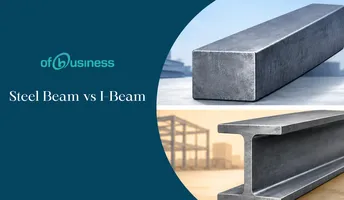
Steel Beam vs I-Beam: Structural Differences Explained
TLDR: Steel beam vs I-beam is a key comparison in construction, affecting strength, cost, and design. This guide explains structural differences, I-beam vs H-beam, beam dimensions, and standard I-beam sizes with charts. Understand steel beam vs I-beam clearly to choose the right section for better load performance and efficient material use. The comparison between steel

