
Yes. Zinc is a non-ferrous metal used in steel coatings, brass, die-casting alloys and some battery electrodes. Zinc oxide is a compound used in applications such as rubber manufacturing. Name the exact form and grade in your enquiry so the supplier can identify the right product.
Metals Shruti Kumari24 Nov 2026
Zinc Uses: 10 Applications in Industrial Manufacturing
Shruti Kumari24 Nov 2026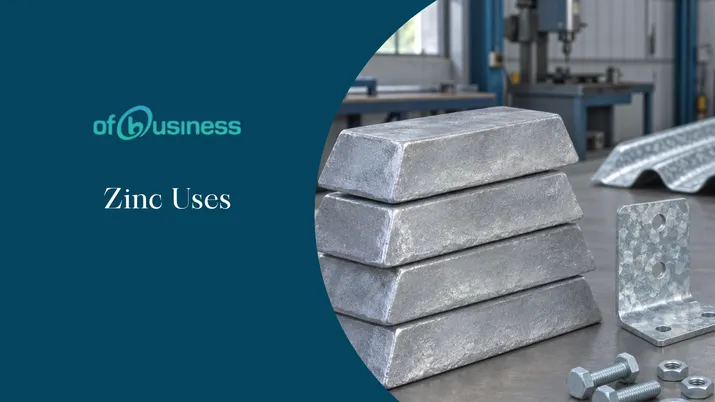
TL;DR: Industrial zinc uses range from protecting steel against corrosion to making cast parts, brass, batteries and rubber goods. The form you buy depends on your production process and the properties your finished product needs. Before placing a bulk order, confirm the grade, review the batch certificate and compare delivered quotes for the same specification.
Industrial zinc uses include protecting steel poles, casting hardware and making brass fittings. Galvanizing is the main use, but the same metal serves very different purposes in battery cells, roofing and rubber compounds. OfBusiness is a B2B industrial procurement platform that connects buyers with verified suppliers. This guide shows how to match the form of zinc to the job and what to specify before requesting a quote.
Table of Contents
What Is Zinc and Why Is It Used in Manufacturing?
Zinc is a non-ferrous metal used to coat steel, make alloys and produce compounds such as zinc oxide. It can protect nearby exposed steel by corroding preferentially under suitable conditions. Zinc alloys can be cast into detailed shapes, while zinc oxide serves a different purpose as an ingredient in rubber compounds.
The chemical properties of zinc help explain why its uses vary. Its electrochemical behaviour makes it useful in protective coatings, sacrificial anodes and battery electrodes. Its ability to form compounds gives it a separate role in rubber manufacturing. A tyre maker therefore specifies a zinc oxide grade, while a galvanizer specifies the chemistry of the metal used in the bath.
10 Industrial Uses of Zinc
Some applications use zinc as a surface coating. Others use it as the main ingredient in a casting alloy or as a compound in a formulation. The table connects each use to the details a buyer should put on the purchase enquiry.
| Zinc use | Where it is used | What buyers should specify |
| 1. Batch hot-dip galvanizing | Fabricated poles, brackets and structural steelwork are coated after fabrication. | Finished coating requirements and inspection criteria. Check IS 4759 where applicable. |
| 2. Continuous sheet galvanizing | Steel sheet is coated on a production line for roofing, cladding and selected automotive applications. | Base steel grade, sheet thickness and coating mass. Check IS 277 where applicable. |
| 3. Electrogalvanizing | Zinc is deposited electrically on selected steel sheet and components. | Coating thickness, surface finish and any required post-treatment. |
| 4. Die casting | Zinc alloys are cast into handles, locks and housings with detailed shapes. | Named alloy grade, dimensional tolerances and finish. |
| 5. Brass production | Zinc is alloyed with copper to make material for valves, fittings and machined parts. | Target brass composition and approved feedstock. |
| 6. Sacrificial anodes | Zinc anodes can help protect suitable marine and buried steel assets. | The anode alloy and assembly specified by the corrosion protection design. |
| 7. Rolled zinc products | Zinc sheet is formed into roofing, façade panels and flashing. | Sheet specification, thickness, finish and installation requirements. |
| 8. Battery manufacturing | Zinc acts as an electrode material in zinc-carbon and alkaline cells. | The zinc form and purity required by the cell design. |
| 9. Rubber manufacturing | Zinc oxide is used in tyre and industrial rubber formulations. | Compound grade and the acceptance limits in the approved formulation. |
| 10. Zinc-rich coatings | Zinc dust is used in primers for specified steel protection systems. | Primer specification and compatibility with the full coating system. |
How Does Zinc Protect Galvanized Steel?
A galvanized coating helps protect steel by keeping it apart from the surrounding environment. At small breaks in the coating, nearby zinc can corrode preferentially and protect exposed steel. Buyers should specify the coating requirement for the expected exposure and use the applicable product standard to define how it will be inspected.
Consider a contractor procuring galvanized poles. The contractor’s enquiry should define the finished coating and inspection criteria. The galvanizer’s enquiry should define the zinc feedstock and its chemistry. IS 209:2024 covers refined zinc. IS 4759 addresses hot-dip zinc coatings on structural steel and allied products within its scope.
How Do You Buy Zinc for Industrial Manufacturing?
Start with the process, then specify the form, grade and quantity. Ask suppliers to quote against the same specification and delivery point. Review the batch certificate before comparing commercial terms. For a repeat purchase, record the landed cost, dispatch lead time and any changes to the approved material grade.
- Identify what enters your process. State whether you need refined ingot, a die-casting alloy, zinc oxide or a finished coated product.
- Define acceptance criteria. Include the applicable standard and the properties you will verify, such as chemistry, dimensions or coating mass.
- Review the batch documents. Ask for the test certificate. Check that the grade and lot number match the order and the material delivered.
- Compare quotes on a common basis. Confirm net weight, freight, applicable taxes, payment terms, delivery schedule and quote validity.
- Qualify a proposed substitute. Have the production or quality team confirm it meets the process requirements before accepting it for regular supply.
What Affects Zinc Ingot Prices in India?
Zinc ingot quotes can vary with grade, stock availability, dispatch location and order quantity. Freight and payment terms affect the cost at your plant. Track quotes for the same grade and dispatch point to read price movement. Compare landed cost per kg when choosing a supplier.
An ex-warehouse quote can appear lower because the buyer still has to arrange transport. Bring both offers to the same delivery basis, then check quote validity and lead time before deciding.
How Can You Source Zinc Through OfBusiness?
Review refined zinc ingots and die-casting alloys in the OfBusiness zinc category. Share the approved grade, required quantity and delivery location when requesting a quote.
Explore Zinc Ingots and Alloys
Ask the supplier to confirm stock, batch documentation and dispatch timing so your team can compare offers against the same production requirement.
Conclusion
Specify zinc by application. A galvanizing line needs suitable feedstock, a die-casting line needs the approved alloy, and a rubber compound needs the right zinc oxide grade. Compare delivered quotes against the same specification and confirm the batch documentation before ordering.
Frequently Asked Questions
Galvanizing iron and steel is the main industrial use. The zinc coating acts as a barrier and can protect nearby steel at small breaks. For a finished galvanized item, check how the applicable product specification defines coating mass or thickness and what inspection records the supplier must provide.
Zinc oxide is used in rubber products such as tyres and industrial components. Buy it against the grade and quality limits in the approved formulation. When changing suppliers, review the batch test results and confirm that the material performs as expected in the production compound.
Suggested Readings
Metals
MS Angle and Channel: Difference, Sizes & Weight
TL;DR: MS angle is an L-shaped steel section for bracing and light framing. MS channel is a C-shaped section that carries load across a span. Angles cost less to fabricate, while channels resist bending better. They are not interchangeable. This guide compares shape, weight, size, and cost, so fabricators and contractors can pick the right

Metals
ISMC Size Chart: MS Channel Weight per Meter, Sizes & Uses
TL;DR: MS channels come in standard ISMC sizes under IS 808, each with a fixed weight per meter that determines load capacity and material cost. ISMC 100 weighs 9.56 kg/m; ISMC 150 weighs 16.80 kg/m; ISMC 200 weighs 22.30 kg/m. This guide covers the full size chart, procurement checklist, and how to source verified MS
Metals
Mild Steel: Types, Grades, Properties, & B2B Procurement Guide
TL;DR: Mild steel is a low-carbon steel used across construction, manufacturing, and infrastructure. It comes in multiple product forms, from TMT bars and HR coils to structural sections and wire rods. This guide helps industrial buyers understand grades, select the right product form, and procure verified mild steel through OFB. MS — short for Mild