
Here’s Everything You Need To Know About Rising Pulses Prices In India
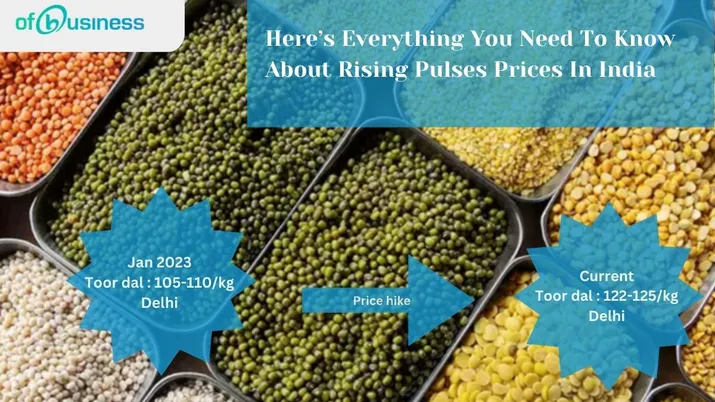
If you’ve recently gone grocery shopping, you may have noticed that the price of pulses such as arhar, urad, and moong, has skyrocketed in 2023. In this article, we’ll take a closer look at why the price is rising, how is it impacting the Indian agriculture sector and what the government is doing to address the issue.
Inflation of Pulses
According to data from the Ministry of Consumer Affairs, in January 2023 toor dal price (1kg) in Delhi was Rs 105-110 but has now increased to Rs 128 and urad dal price (1kg) in Delhi was Rs 118 but now, it is Rs 123. In addition to that, moong dal price (1kg) has also seen an increase from Rs 103 to Rs 112.
Why Is The Price Rising?
The main reason for the rise in pulse prices is the hoarding by importers. Companies importing pulses from Myanmar have hoarded 1.50 lakh tons of pigeon pea and about 2 lakh tons of urad, which has caused a shortage of supply in the domestic market. These importers plan to import the stock at higher prices and sell it at a profit.
Market Outlook
To control the rising prices, the government can sell arhar, urad, and moong from its pool in the open market. The government can also sell stock through Kendriya Bhandar and NAFED. Authorities have also started stock verification at processing units in major production hubs in Maharashtra to prevent hoarding.
OFB’s Insight
The rise in pulse prices is affecting everyone, from the middle class to the poor. Pulses are a significant source of protein and a vital food item for many households. The government’s efforts to control the rising prices through stock verification and selling in the open market can help alleviate the problem of the Indian agriculture sector. However, it is essential to address the root cause of hoarding and prevent it from happening in the future. Additionally, initiatives like increasing farmer registration can help support farmers and ensure that they receive fair prices for their produce.
Read More: Is Falling Masoor Price In India A Warning Sign For The Future?
For real time commodity prices, latest news, and insights, please download the all NEW and all FREE OfBusiness APP.
Suggested Readings
Parmal Rice vs Basmati Rice – Nutrition, GI and Health Benefits of Indian Varieties
TL;DR: Parmal rice is a non-aromatic, protein-rich variety from Punjab and Haryana with a low glycemic index — making it a practical choice for everyday health-conscious consumption. Basmati offers balanced amino acids, superior aroma, and a medium GI. Indrayani supports digestive health and carries a medium GI. This guide covers the nutritional profiles and GI
Edible Oil Importers in India: Duties, Supply and Industry Outlook
TL;DR: India’s vegetable oil imports fell 29% year-on-year in June 2026, but cumulative imports between November 2025 and June 2026 remained 6% higher. Lower domestic stocks, slower oilseed crushing and festive-season demand may support stronger imports in the coming months. Palm oil remains India’s largest imported edible oil, while India soybean oil imports have increased
8 Products Extracted From Sugarcane (Apart From Sugar And Ethanol)
Sugarcane is an incredibly versatile crop, there is a reason why it has been cultivated for thousands of years. It's one of the most popularly cultivated crops across the world, with over 80 countries cultivating it. Part of the reason for its success is its vast array of products that are made from sugarcane. Sugar and ethanol are two products derived from sugarcane and these two products are well known. But that’s not it. There are other products derived from sugarcane as well. In this article, we will describe other derived products derived from sugarcane as well.