
Unseasonal Rain In Gujarat Causes Surge In Spice Prices
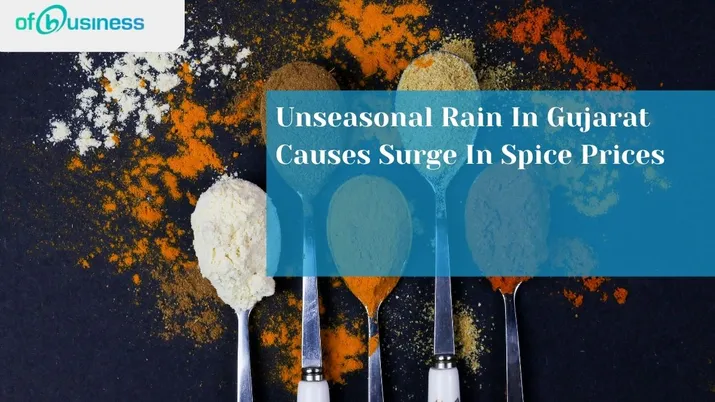
The recent spell of unseasonal rain in Gujarat has brought a mixed bag of fortunes for the state’s agriculture sector. While it has provided relief from scorching temperatures, it has also resulted in a price surge of key cash crops like cumin, coriander, fennel, fenugreek, and castor. In this article, let’s take a closer look at the rainfall’s impact on Gujrat’s agriculture sector and how it is expected to affect the prices of key crops.
Poor Yield And Strong Demand
- Cumin Seeds- Gujarat and Rajasthan are the primary producers and exporters of cumin seeds to the world. However, the recent rainfall has tightened the supply-demand equation for cumin, resulting in a significant increase in prices. Even though this year’s cumin yields are higher than last year’s, the recent rain is predicted to cause yields to drop by at least 20%, which will put pressure on pricing. Cumin is predicted to be in demand this year in quantities of 85 lakh bags, but there may only be 65 lakh bags available, according to Federation of Indian spice stakeholders (FISS) forecasts. As a result, cumin prices have already gone up by 10% in recent weeks, and a further price increase is expected.
- Key Cash Crops- Apart from cumin, other crops such as fennel, fenugreek, and psyllium are also expected to be affected by the unseasonal rainfall. The psyllium crop is heavily traded in the Unjha market yard in Mehsana district, and at least 70% of the crop is yet to be harvested, with crop damage due to the rain very likely. The quality of still unharvested crops (fennel, fenugreek, and coriander) is also expected to suffer. As Gujarat is a major producer of fennel, fennel seed prices are also expected to increase. Similarly, fenugreek prices are expected to shoot up because part of the harvest in Gujarat, Madhya Pradesh, and Rajasthan is expected to be damaged as well.
Export Demand Expected To Grow
Despite the unseasonal rain’s impact on supply, more people are expected to buy spices abroad. Spice exports are anticipated to rise because of rising demand after Covid restrictions were loosened in numerous nations. Due to the low demand, exports of crops including cumin, fennel, and fenugreek decreased in 2022. However, because Covid regulations have been relaxed, it is anticipated that cumin consumption would increase in China this year. A rise in export demand could further pressurize prices.
Insight
While the supply of key cash crops is expected to be limited, their demand is set to rise, resulting in a surge in prices. However, with export demand expected to grow, the impact of rainfall on prices may be further compounded. It remains to be seen how the agriculture sector in Gujarat will cope with these challenges in the coming months.
Read more: Growing Demand For Pulse Crops In Pet Food Industry
Suggested Readings
Parmal Rice vs Basmati Rice – Nutrition, GI and Health Benefits of Indian Varieties
TL;DR: Parmal rice is a non-aromatic, protein-rich variety from Punjab and Haryana with a low glycemic index — making it a practical choice for everyday health-conscious consumption. Basmati offers balanced amino acids, superior aroma, and a medium GI. Indrayani supports digestive health and carries a medium GI. This guide covers the nutritional profiles and GI

Edible Oil Importers in India: Duties, Supply and Industry Outlook
TL;DR: India’s vegetable oil imports fell 29% year-on-year in June 2026, but cumulative imports between November 2025 and June 2026 remained 6% higher. Lower domestic stocks, slower oilseed crushing and festive-season demand may support stronger imports in the coming months. Palm oil remains India’s largest imported edible oil, while India soybean oil imports have increased

8 Products Extracted From Sugarcane (Apart From Sugar And Ethanol)
Sugarcane is an incredibly versatile crop, there is a reason why it has been cultivated for thousands of years. It's one of the most popularly cultivated crops across the world, with over 80 countries cultivating it. Part of the reason for its success is its vast array of products that are made from sugarcane. Sugar and ethanol are two products derived from sugarcane and these two products are well known. But that’s not it. There are other products derived from sugarcane as well. In this article, we will describe other derived products derived from sugarcane as well.