
Weekly Report: Soybean Prices Stable In Maharashtra's Solapur

Opening at 5200 rupees on Monday and closing at 5250 rupees on Saturday, soybean prices in Maharashtra’s Solapur witnessed weekly stability. Let’s explore the factors that contributed to the stable soybean prices, the implications for farmers and the price outlook.
Attributing Factors
The following factors can be attributed to price stability:
- Strong Demand & Limited Supply– Last week, there was a notable soybean demand surge, resulting in a price increase of 50 rupees per quintal. Demand increase was met with limited supply and arrivals, which further supported soybean price stability. Kirti Plants in Maharashtra experienced an increase of 80-100 rupees in delivery prices, while most plants in Madhya Pradesh observed a weekly decrease of 50-75 rupees. The limited market arrivals in the mandis led to a decreased soybean demand at lower levels.
- International Trends– Internationally, soybean prices strengthened by 2.70%. This increase can be attributed to the possibility of dry weather in the United States, a major soybean-producing country. Additionally, the monthly report from the United States Department of Agriculture (USDA) predicted an increase in global soybean stocks. These factors contributed to the overall strength of international soybean prices.
- MSP & Farmer Expectations– This season, the Indian government has set the soybean Minimum Support Price (MSP) at 4600 rupees per quintal, raising it by 300 rupees. This increase reflects a significant growth of 80% since 2014 when soybean MSP was 2560 rupees per quintal. Farmers, who witnessed soybean prices above 7000 rupees during the sowing period last year, are hopeful that prices will remain fair and will not decrease after the harvest.
Market Outlook
The future soybean price trends will depend on various factors, primarily the monsoon’s progress and the influence of El Niño. Adverse weather conditions could lead to crop losses and impact prices accordingly. Based on current observations, there is a likelihood of a significant increase of 250-300 rupees from the current levels in the next 1-1.5 months. This indicates a positive outlook for farmers as well as the soybean market.
OFB’s Insight
Soybean prices in Maharashtra’s Solapur remained stable last week due to strong demand, limited supply, international trends, and increased MSP. Farmers are hopeful for fair prices after the harvest and anticipate a potential prices increase. The final trajectory of soybean prices will depend on weather conditions, making it crucial to monitor the progress of the monsoon and the influence of El Niño.
Read more: Mustard Oil Prices: Decline In Delhi, Stable In Other Markets
For real time commodity prices, latest news, and insights, please download the all NEW and all FREE OfBusiness APP.
Suggested Readings
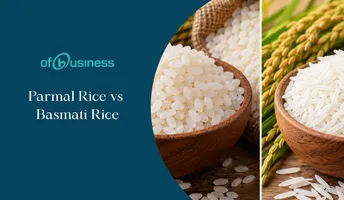
Parmal Rice vs Basmati Rice – Nutrition, GI and Health Benefits of Indian Varieties
TL;DR: Parmal rice is a non-aromatic, protein-rich variety from Punjab and Haryana with a low glycemic index — making it a practical choice for everyday health-conscious consumption. Basmati offers balanced amino acids, superior aroma, and a medium GI. Indrayani supports digestive health and carries a medium GI. This guide covers the nutritional profiles and GI

Edible Oil Importers in India: Duties, Supply and Industry Outlook
TL;DR: India’s vegetable oil imports fell 29% year-on-year in June 2026, but cumulative imports between November 2025 and June 2026 remained 6% higher. Lower domestic stocks, slower oilseed crushing and festive-season demand may support stronger imports in the coming months. Palm oil remains India’s largest imported edible oil, while India soybean oil imports have increased

8 Products Extracted From Sugarcane (Apart From Sugar And Ethanol)
Sugarcane is an incredibly versatile crop, there is a reason why it has been cultivated for thousands of years. It's one of the most popularly cultivated crops across the world, with over 80 countries cultivating it. Part of the reason for its success is its vast array of products that are made from sugarcane. Sugar and ethanol are two products derived from sugarcane and these two products are well known. But that’s not it. There are other products derived from sugarcane as well. In this article, we will describe other derived products derived from sugarcane as well.

