
Are Mid-Sized Mills In Durgapur Shifting To TMT Production For Better Margins?

Durgapur, a city in West Bengal known for its Steel industry, has seen a shift in production focus by a few mid-sized mills. Instead of manufacturing Wire Rods, these mills have started to focus on producing thermo-mechanically treated (TMT) bars. The reason behind this shift is the better margins offered by TMT production as compared to Wire Rods. Let’s explore the factor behind this shift.
Price And Demand Of TMT And Wire Rod
- Price Dynamics- TMT and Wire Rod prices have also witnessed a shift in dynamics. Generally, Wire Rod prices are Rs. 500/ton higher than TMT prices. However, now it is the exact opposite as TMT prices are high by around Rs. 400-600/ton from Wire Rod. This has led to a few mills stopping Wire Rod production entirely and shifting to producing TMT only.
- Current Prices- The current offers for Mid-Sized Mills’ TMT in Durgapur, West Bengal for Fe 500 are around Rs. 51,500-51,800/ton, and for 500D, it is in the range of Rs. 54,000-54,500/ton on an ex-works basis. However, only a few mills are offering Wire Rods in the spot market, continuing to offer at around Rs. 51,200-51,500/ton ex-Durgapur.
- Demand- When it comes to demand, the TMT market has witnessed average demand in the spot market, but limited liftings were seen on higher offers by mills. On the other hand, despite the shortage of Wire Rods in the market, the demand remained relatively low.
Insight
The shift in production focus from Wire Rod to TMT by a few mid-sized mills in Durgapur is due to better margins. The current price dynamics show that TMT prices are higher than Wire Rod prices, leading to a few mills stopping Wire Rod production entirely. The market predictions indicate that the TMT market will remain stable, while the Wire Rod market is uncertain.
Read more: Here’s Why Indian Silicon Manganese Market Is Experiencing A Price Hike
For real time commodity prices, latest news, and insights, please download the all NEW and all FREE OfBusiness APP
Suggested Readings

MS Angle and Channel: Difference, Sizes & Weight
TL;DR: MS angle is an L-shaped steel section for bracing and light framing. MS channel is a C-shaped section that carries load across a span. Angles cost less to fabricate, while channels resist bending better. They are not interchangeable. This guide compares shape, weight, size, and cost, so fabricators and contractors can pick the right

ISMC Size Chart: MS Channel Weight per Meter, Sizes & Uses
TL;DR: MS channels come in standard ISMC sizes under IS 808, each with a fixed weight per meter that determines load capacity and material cost. ISMC 100 weighs 9.56 kg/m; ISMC 150 weighs 16.80 kg/m; ISMC 200 weighs 22.30 kg/m. This guide covers the full size chart, procurement checklist, and how to source verified MS
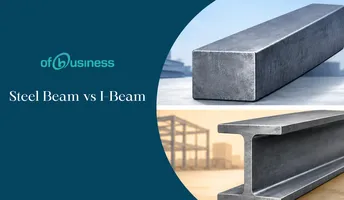
Steel Beam vs I-Beam: Structural Differences Explained
TLDR: Steel beam vs I-beam is a key comparison in construction, affecting strength, cost, and design. This guide explains structural differences, I-beam vs H-beam, beam dimensions, and standard I-beam sizes with charts. Understand steel beam vs I-beam clearly to choose the right section for better load performance and efficient material use. The comparison between steel

