
India's Domestic Semi-Finished Steel Market Remains Uncertain, Are Prices Affected?

Indian Semi-Finished Steel market has experienced significant volatility in recent times, primarily due to poor lifting and subdued demand. Throughout May 2023, the market has witnessed downward price pressure, leading to declined Billet and Sponge Iron prices across various regions in the country. The limited inquiries and low buying interest among market participants have resulted in sellers reducing prices. This lack of demand has triggered a downward trend in the market. Let’s explore the current market scenario.
Current Price Movement
Billet and Sponge Iron prices have been adversely affected, resulting in a price correction. On a weekly basis, the Billet prices plunged up to Rs. 1,000/ton with a major fall noticed in Raipur, Chennai, and Hyderabad. Additionally, the Sponge Iron market also saw a price correction in the range of Rs. 300-1,000/ton pan India with a maximum fall observed in Ramgarh and Southern regions, assessed by Ofbusiness.
- Billet Price:
- Ex-Mandi: Rs. 47,350/ton
- Ex-Durgapur: Rs. 43,600/ton
- Ex-Raipur: Rs. 43,000/ton
- Ex-Chennai: Rs. 45,550/ton
- Ex-Hyderabad: Rs. 44,200/ton
- Sponge PDRI:
- Ex-Durgapur: Rs. 26,500/ton
- Ex-Raipur: Rs. 27,650/ton
- Ex-Ramgarh: Rs. 26,450/ton
- Ex-Hyderabad: Rs. 28,500/ton
Market Outlook
Despite the prevailing market challenges, India’s domestic Semi-Finished Steel market outlook remains unpredictable due to the evolving market conditions.
OFB’s Insight
The Indian domestic Semi-Finished Steel market faced significant fluctuations due to weakened demand, leading to decreased prices. With a limited number of inquiries and low buying interest, sellers were compelled to lower prices to align with the demand-supply dynamics. Market participants are closely monitoring domestic trends and mill strategies in response to these conditions.
Read more: Indian Stainless Steel Market Maintains Stability Amid Fluctuating Nickel Futures
For real time commodity prices, latest news, and insights, please download the all NEW and all FREE OfBusiness APP
Suggested Readings

MS Angle and Channel: Difference, Sizes & Weight
TL;DR: MS angle is an L-shaped steel section for bracing and light framing. MS channel is a C-shaped section that carries load across a span. Angles cost less to fabricate, while channels resist bending better. They are not interchangeable. This guide compares shape, weight, size, and cost, so fabricators and contractors can pick the right

ISMC Size Chart: MS Channel Weight per Meter, Sizes & Uses
TL;DR: MS channels come in standard ISMC sizes under IS 808, each with a fixed weight per meter that determines load capacity and material cost. ISMC 100 weighs 9.56 kg/m; ISMC 150 weighs 16.80 kg/m; ISMC 200 weighs 22.30 kg/m. This guide covers the full size chart, procurement checklist, and how to source verified MS
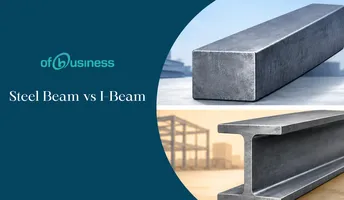
Steel Beam vs I-Beam: Structural Differences Explained
TLDR: Steel beam vs I-beam is a key comparison in construction, affecting strength, cost, and design. This guide explains structural differences, I-beam vs H-beam, beam dimensions, and standard I-beam sizes with charts. Understand steel beam vs I-beam clearly to choose the right section for better load performance and efficient material use. The comparison between steel

