
SAIL Receives Export Orders For Special Quality Steel Plates
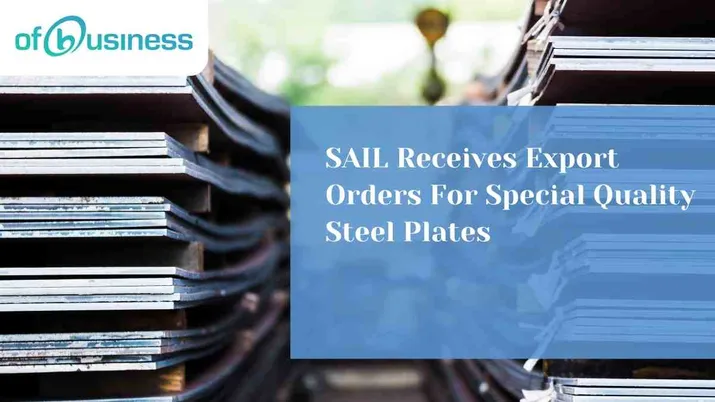
A subsidiary of the Steel Authority of India (SAIL)– Bhilai Steel Plant (BSP), has received new orders from the UAE to supply large volumes of special quality plates. The plant has received an export order of around 10,000 tons of plates, complying with European and American specifications. Another order of around 10,000 tons of plates of mild and high-tensile grades is in the completion stage.
Certification And Quality Assurance
Recently, BSP received certification for the Grades BS 10025 JR-AR and A 572 Gr.50 Type 3, which are now produced in the plate mill for the first time. The plant’s quality department has been closely monitoring the production process and the successful and timely execution of the export orders. The addition of boron in limited quantities and titanium has made the steel compliant with National Export Tax norms.
SAIL-Bhilai Unit To Ship 34,000 Tons Of Plates
The SAIL-Bhilai unit plans to ship 34,000 tons of plates to West Asian countries, including Dubai in the UAE, in the current financial year. An order of around 14,000 tons of plates was already supplied in August 2022, with different grades dual-certified to European and American specifications. West Asia has a high demand for plates and thermo-mechanically treated (TMT) bars due to the presence of traders and large-scale construction activities. Since there are no facilities for the production of such plates in the region, the demand for such material is met through imports from neighbouring Asian countries.
Competing With Global Players
China, South Korea, Ukraine, and Russia are prominent suppliers in the global market. When it comes to meeting the demand in Southwest Asia, they are tough competitors for India. Competing with these global players, the SAIL-Bhilai plant has forayed into the export market again in the current fiscal year by bagging orders from the UAE.
Insight
The recent orders received by BSP from the UAE are a significant achievement for the plant and a positive development for India’s steel industry. The successful execution of these orders will strengthen SAIL-Bhilai’s position in the global market, and the plant will continue to strive towards supplying high-quality plates to meet the demand of customers both domestically and internationally.
Read more: Indian Steel Market Remains Supported During The Week 9 Of 2023
Suggested Readings
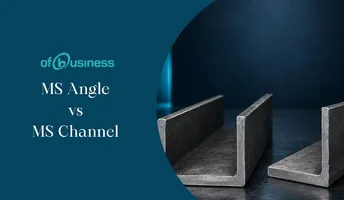
MS Angle and Channel: Difference, Sizes & Weight
TL;DR: MS angle is an L-shaped steel section for bracing and light framing. MS channel is a C-shaped section that carries load across a span. Angles cost less to fabricate, while channels resist bending better. They are not interchangeable. This guide compares shape, weight, size, and cost, so fabricators and contractors can pick the right

ISMC Size Chart: MS Channel Weight per Meter, Sizes & Uses
TL;DR: MS channels come in standard ISMC sizes under IS 808, each with a fixed weight per meter that determines load capacity and material cost. ISMC 100 weighs 9.56 kg/m; ISMC 150 weighs 16.80 kg/m; ISMC 200 weighs 22.30 kg/m. This guide covers the full size chart, procurement checklist, and how to source verified MS

Steel Beam vs I-Beam: Structural Differences Explained
TLDR: Steel beam vs I-beam is a key comparison in construction, affecting strength, cost, and design. This guide explains structural differences, I-beam vs H-beam, beam dimensions, and standard I-beam sizes with charts. Understand steel beam vs I-beam clearly to choose the right section for better load performance and efficient material use. The comparison between steel