
What Is The Contribution Of Sugar Industry In India’s Rural Development?

Sugar production in India has been a significant contributor to rural development in the country, with a deep-rooted relationship between the two. The relationship between the sugar industry in India and rural development in India is a symbiotic one, where the growth and development of one have positively impacted the other. The sugar industry of India has served as a vital source of income and employment for many rural communities. In this article, we will understand more about the sugar industry and its contribution towards rural India’s development.
Role In The Indian Economy
The sugar industry’s contributions to India’s economic and social development cannot be underestimated. It is one of the largest agro-based industries that contribute significantly to the country’s GDP. Annually, the sugar industry in India produces:
• 370-400 million tons of cane
• 32-37 million tons of sugar
• 6-8 million tons of jaggery
• A significant amount of khandsari
The industry is also involved in the production of other chemicals and generates 3.2 billion litres of alcohol and 4700 MW of power, with the potential to export around 3500 MW of power to the national grid. In this way, the sugar industry acts as a crucial player in India’s economy and rural development.
Role In Rural Development (And Entrepreneurship)
Apart from contributing to the economic growth, the sugar industry of India plays a crucial role in the development of rural India by:
• Creating social infrastructure
• Generate employment opportunities
• Promoting sustainable agricultural practices
Additionally, the industry has accelerated the pace of rural industrialization, leading to entrepreneurial activities such as the establishment of dairies, poultries, fruit and vegetable processing units, and credit facilities. This has brought significant socio-economic changes, improving the standard of living in rural India, and making people more self-reliant.
Factors Enhancing Industry’s Contribution To Rural Development
• Sugarcane Varietal Development And Research Facilitation – Sugarcane varietal development is a significant component of sugarcane research and development in India, with several research organizations working on location-specific technologies along with sugar mills and farmers for improvement in sugarcane and sugar productivity. The Sugarcane Development Departments of various states strive to improve resource utilization, encouraging inter-cropping for maximum profit, controlling pests and diseases with integrated techniques, and optimizing post-harvest management. Incentives and subsidies are provided to sugarcane farmers who adopt these practices, making them increasingly popular in rural areas.
• Mechanization Advancements And Irrigation Management For Rural Areas – The mechanization of sugarcane agriculture is an invaluable technological breakthrough that can bring self-sufficiency to rural communities in sugarcane-growing regions. A well-designed and implemented mechanization program can reduce human labour, protect the crop in difficult conditions, and limit the need for human intervention. Mechanization can help alleviate the labour shortage and costly manual labour, making the cultivation of this labour-intensive crop financially viable.
In addition to mechanization, irrigation management is another critical aspect of the sugar industry’s relationship with rural development. Sugarcane requires timely and efficient irrigation, particularly during critical stages of growth, and proper management of available water can help enhance water availability. Innovative techniques such as skip furrow irrigation and micro-irrigation systems are being practised to conserve water and improve economic water productivity, leading to more sustainable and efficient use of available water resources.
OFB’s Insight
The sugar industry in India has a significant impact on the country’s economy and rural development. The industry can continue to encourage the development of new and improved sugarcane varieties through research and development programs to increase productivity and enhance disease resistance. Encouraging the use of renewable energy sources, such as bagasse-based cogeneration and biofuels, can also help reduce reliance on fossil fuels and enhance the industry’s energy self-sufficiency. Strong linkages between sugar mills, sugarcane growers, and other stakeholders can also ensure a seamless flow of information, expertise, and resources. Finally, a significant step can be taken by developing effective mechanisms to constantly ensure fair pricing of sugarcane and sugar products to provide farmers in rural regions with a stable source of income.
Read more: Here Is India’s Sugar Production And Exports Statistics
For real time commodity prices, latest news, and insights, please download the all NEW and all FREE OfBusiness APP.
Suggested Readings
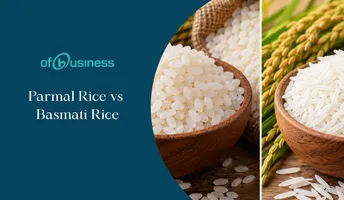
Parmal Rice vs Basmati Rice – Nutrition, GI and Health Benefits of Indian Varieties
TL;DR: Parmal rice is a non-aromatic, protein-rich variety from Punjab and Haryana with a low glycemic index — making it a practical choice for everyday health-conscious consumption. Basmati offers balanced amino acids, superior aroma, and a medium GI. Indrayani supports digestive health and carries a medium GI. This guide covers the nutritional profiles and GI

Edible Oil Importers in India: Duties, Supply and Industry Outlook
TL;DR: India’s vegetable oil imports fell 29% year-on-year in June 2026, but cumulative imports between November 2025 and June 2026 remained 6% higher. Lower domestic stocks, slower oilseed crushing and festive-season demand may support stronger imports in the coming months. Palm oil remains India’s largest imported edible oil, while India soybean oil imports have increased

8 Products Extracted From Sugarcane (Apart From Sugar And Ethanol)
Sugarcane is an incredibly versatile crop, there is a reason why it has been cultivated for thousands of years. It's one of the most popularly cultivated crops across the world, with over 80 countries cultivating it. Part of the reason for its success is its vast array of products that are made from sugarcane. Sugar and ethanol are two products derived from sugarcane and these two products are well known. But that’s not it. There are other products derived from sugarcane as well. In this article, we will describe other derived products derived from sugarcane as well.

