
A non-ferrous metal is a metal or alloy that does not contain iron as a main component. It does not form red rust and is usually non-magnetic. Common examples include aluminium, copper, zinc, lead and tin.
Apparel
Non-Ferrous Metal: Meaning, Types, Properties, and Industrial Applications
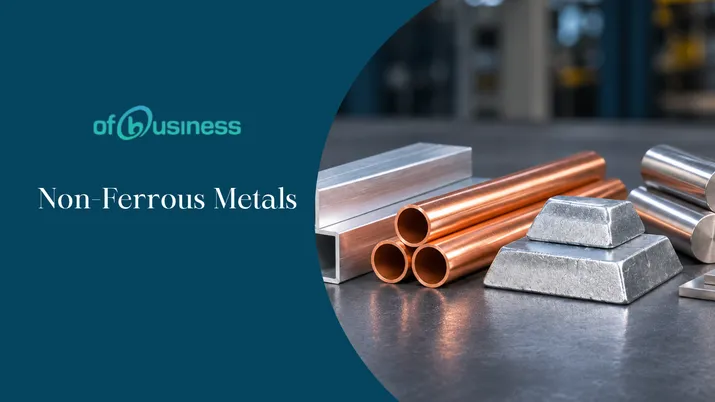
A non-ferrous metal is a metal or alloy that does not contain iron as its main element. It resists red rust and often weighs less than steel. Aluminium, copper, zinc, lead and tin are common examples. This guide covers their meaning, list, properties, alloys and uses, and compares them with ferrous metals. It is written for buyers on OfBusiness (OFB), a B2B industrial procurement platform.
Table of Contents
What Is a Non-Ferrous Metal?
A non-ferrous metal is any metal or alloy that does not contain iron as a main component. The word ferrous comes from the Latin ferrum, meaning iron. Non-ferrous metals do not form red rust, though some corrode in other ways. Most are non-magnetic, with nickel and cobalt as notable exceptions.
Ferrous metals such as carbon steel and cast iron are built on iron. Non-ferrous materials are built on other base metals such as aluminium, copper or zinc. Many are used as alloys, which combine a base metal with other elements to improve strength, hardness or workability.
Non-Ferrous Metal List: Examples and Uses
The most common industrial non-ferrous metals are aluminium, copper, zinc, lead, tin, nickel and titanium. Precious metals such as gold, silver and platinum are also non-ferrous. Each is bought in specific forms to specific standards, as the table shows.
| Metal | Key traits | Common forms | Indian standard reference | Typical uses |
| Aluminium | Light, corrosion resistant, conductive | Ingots, wire rod, sheet, extrusions | IS 617 (ingots and castings); IS 5082 (wrought, electrical use) | Packaging, transport, construction, conductors |
| Copper | Best conductor among common metals, ductile | Cathode, wire rod, sheet, tube | IS 191 | Wiring, motors, plumbing, heat exchangers |
| Zinc | Protects steel, low melting point | Ingots, alloy ingots | IS 209 | Galvanising, die casting, brass making |
| Lead | Dense, soft, corrosion resistant | Pig lead, ingots | IS 27 | Batteries, radiation shielding, cable sheathing |
| Tin | Soft, non-toxic, low melting point | Ingots | Confirm the applicable specification | Solder, bronze, plating |
| Nickel | Heat and corrosion resistant, magnetic | Cathode, briquettes | Confirm the applicable specification | Alloy steels, batteries, plating |
| Titanium | High strength for its weight, corrosion resistant | Sponge, bar, sheet | ASTM specifications | Aerospace, chemical plant, implants |
Zinc is primarily used as a protective layer for ferrous metals. Galvanised steel is a ferrous material coated in a non-ferrous one, which is why it resists rust.
What Are the Key Properties of Non-Ferrous Metals?
The key properties of non-ferrous metals are rust resistance, electrical and thermal conductivity, low weight, malleability and recyclability. Not every metal has all of them. Copper is the standard electrical conductor, aluminium is light, and lead is dense. Choose the metal by the property your application needs most.
- Rust resistance: Aluminium forms a protective oxide, copper develops a green patina, and zinc corrodes slowly. This suits pipes, roofing and marine hardware.
- Mostly non-magnetic: Aluminium, copper, zinc and lead suit electronics and medical equipment. Nickel and cobalt are magnetic.
- Conductivity: Copper and aluminium move electricity and heat efficiently.
- Lightness: Aluminium and titanium cut weight in vehicles and aircraft.
- Malleability: Copper, aluminium and tin form easily into wire, sheet and extrusions.
- Recyclability: Aluminium, copper and brass carry high scrap value and can be remelted repeatedly.
Non-ferrous does not mean corrosion-proof. Always match the metal to the environment it will face.
What Are Non-Ferrous Alloys?
Non-ferrous alloys are metals made by combining a non-iron base metal with other elements to improve strength, hardness, castability or corrosion resistance. Brass, bronze, solder and most aluminium alloys are common examples. Alloying lets one base metal serve many engineering jobs.
| Alloy | Main elements | Key properties | Typical uses |
| Brass | Copper and zinc | Machinable, corrosion resistant | Fittings, hardware, electrical parts |
| Bronze | Copper and tin | Wear resistant, strong | Bearings, bushings, marine parts |
| Aluminium alloys | Aluminium with magnesium, silicon, copper or zinc | Light and strong | Extrusions, aircraft parts, cans |
| Zinc alloys | Zinc with aluminium, magnesium and copper | Easy to die cast | Die-cast fittings and components |
| Solder | Tin-based | Low melting point | Electronics and plumbing joints |
Brass is commonly sold to IS 319 (free-cutting bars) and IS 410 (sheet and strip).
What Is the Difference Between Ferrous and Non-Ferrous Metals?
The difference between ferrous and non-ferrous metals is iron content. Ferrous metals contain iron, are usually magnetic and strong, and most rust unless protected. Non-ferrous metals contain little or no iron, resist red rust and are mostly non-magnetic. They often cost more per kilogram. Choose by environment, weight limit and conductivity needs.
| Feature | Ferrous metals | Non-ferrous metals |
| Iron content | High | Little or none |
| Rust resistance | Low unless coated or alloyed | No red rust; other corrosion possible |
| Magnetism | Usually magnetic; austenitic stainless is mostly not | Mostly non-magnetic; nickel and cobalt are magnetic |
| Weight | Steel density about 7.85 g/cm³ | Often lighter; aluminium about 2.7 g/cm³ |
| Conductivity | Lower | High in copper and aluminium |
| Melting point | Steel melts roughly 1,400–1,500°C | Varies: aluminium about 660°C, copper about 1,085°C, zinc about 420°C |
| Main cost driver | Iron ore and coking coal | LME prices, energy and USD/INR |
| Recycling | Widely recycled; sorted by magnet | Widely recycled; high scrap value |
| Typical use | Structures, rebar, machinery | Wiring, packaging, aerospace, plumbing |
Ferrous and non-ferrous alloys differ by base metal. Ferrous alloys such as steel and stainless steel use iron as the base. Non-ferrous alloys such as brass and bronze use another base metal.
How to Choose Between Non-Ferrous and Ferrous Metals?
Choose non-ferrous metals for light weight, conductivity or corrosion resistance, and ferrous metals for strength and low cost per tonne. Stainless steel sits in between, since it is ferrous but resists rust. Match the metal to the load, the environment and the budget.
| Your need | Typically choose | Why |
| High structural load at low cost | Mild steel (ferrous) | Strength per rupee |
| Rust resistance with low maintenance | Stainless steel (ferrous) or aluminium (non-ferrous) | No painting or coating needed |
| Weight-critical parts | Aluminium or titanium | Low density |
| Electrical conduction | Copper or aluminium | High conductivity |
| Wear and bearings | Bronze | Wear resistance |
| Protecting steel from rust | Zinc coating | Sacrificial protection |
Industrial Applications of Non-Ferrous Metals
Non-ferrous metals appear in almost every sector because they solve problems that ferrous metals cannot, such as weight, conductivity and corrosion. They often work alongside steel in the same product.
- Aerospace and Transportation: Aircraft and vehicles rely heavily on aluminium and titanium because fuel efficiency depends on weight. Steel remains important for engines, landing gear and chassis parts.
- Electrical and Electronics: Copper is the standard choice for wiring, motors and circuitry. Aluminium carries overhead transmission lines where weight and cost matter more than compactness. Gold is used on connectors because it resists corrosion. Silver conducts best of all metals but tarnishes.
- Building and Construction: Ferrous metals form the skeleton of a building: structural steel and TMT rebar. Non-ferrous metals supply the envelope and services: aluminium windows and cladding, copper pipes and wiring, and zinc roofing and coatings. India’s finished steel consumption was about 164 million tonnes in 2025-26, driven partly by construction and infrastructure (Ministry of Steel).
- Packaging and Energy: Aluminium dominates cans and foil. Lead is used in batteries, and nickel and zinc feed alloy production and battery chemistries.
How to Buy Non-Ferrous Metals?
Buying non-ferrous metals takes seven steps: specify the metal, grade and form; confirm the standard; request test certificates; verify identity; qualify the supplier; compare quotes on one basis; and inspect on delivery. Most disputes come from grade or purity shortfalls, so fix the specification in writing first.
- Specify the metal, alloy or grade, and form, for example aluminium ingot or copper wire rod.
- Confirm the standard, such as IS 617 for aluminium ingot or IS 191 for copper.
- Request the test certificate or analysis report showing purity or composition.
- Verify identity on a sample using spectrometer or XRF testing.
- Qualify the supplier on documentation and past performance.
- Compare quotes on the same basis: LME-linked rate, ex-works or delivered, taxes included or excluded.
- Inspect form, weight, markings and packaging on delivery.
What Determines Non-Ferrous Metal Prices in India?
Non-ferrous metal prices in India follow London Metal Exchange rates, USD/INR, import duty, freight and local premiums. Prices can move fast: on MCX, copper rose about 28% and aluminium about 33–36% between November 2025 and April 2026 (Informist). Ferrous prices follow iron ore, coking coal and domestic demand.
Conclusion
A non-ferrous metal earns its place where weight, conductivity or rust resistance outweighs a higher price per kilogram. Match the metal and alloy to the application, fix the standard in writing, and compare quotes on one pricing basis. Explore OFB’s non-ferrous category to compare verified suppliers, with procurement credit through Oxyzo for large orders.
Frequently Asked Questions
Non-ferrous examples are aluminium, copper, zinc, lead, tin, nickel and titanium, plus alloys such as brass and bronze. Precious metals such as gold, silver and platinum are also non-ferrous. Ferrous examples are mild steel, alloy steel, stainless steel, cast iron and wrought iron.
Ferrous metals contain iron as the main element, are usually magnetic and strong, and most rust unless protected. Non-ferrous metals contain little or no iron, resist red rust and are mostly non-magnetic. Non-ferrous metals often cost more per kilogram but can be lighter and more conductive.
Suggested Readings

Apparel
Empowering SMEs in the Leather and Footwear Industry
India accounts for nearly 13% of the world’s leather production. The industry handles an annual production of about three bn sq. ft. of Leather, and it is one of the top foreign exchange earners for the country. The major drivers of the leather sector in India include the footwear and fashion industry. Although India has an abundance of

Apparel
Will China's Massive Cotton Yarn Order Revive India's Textile Industry?
Xinjiang province in China produces over 70% of the country’s total cotton production. However, the province has faced lower cotton crop production in 2023, resulting in China placing a large order for cotton yarn from India. China’s recent order of nearly 5,000 tons of cotton yarn from India has sent ripples across the textile industry.

Apparel
Can Rising Cotton Prices In India Overcome Global Textile And Apparel Consumption Challenges?
In recent times, the Indian cotton market has been facing challenges due to low arrivals and a slow recovery in textile and apparel consumption. However, despite these obstacles, the market has shown resilience, with Indian cotton prices remaining firm and even showing an uptrend. The government’s efforts to support downstream capacity expansion and favourable economic