
Aluminium vs Copper: Conductivity, Cost and Use Cases
 Shruti Kumari19 Nov 2026
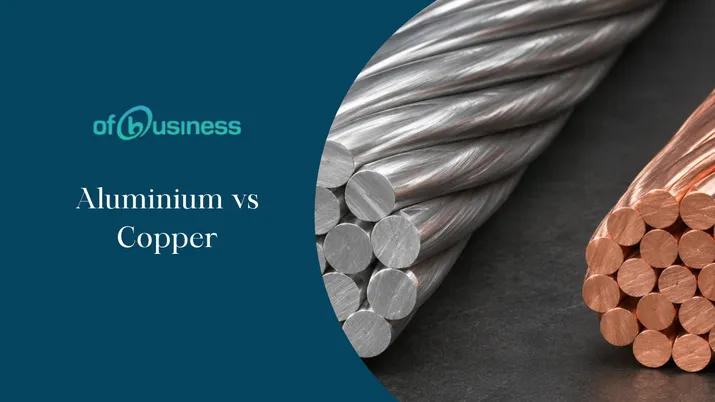
TL;DR: Copper conducts electricity better at the same size, making it useful where wiring space is limited. Aluminium needs a larger conductor to achieve the same electrical resistance, yet the conductor can still weigh about half as much. Compare both options for the same load and route, then check the cost of fittings, installation and energy losses before ordering.
Choose copper when the design needs a smaller conductor. Evaluate aluminium when conductor weight or the installed cost of a long cable run matters. For Indian manufacturers and contractors, the decision often comes down to whether a larger cable fits the existing route and equipment. This OfBusiness guide explains how to compare both metals, assess supplier quotes and verify the specification before ordering.
Table of Contents
What Is the Difference Between Aluminium and Copper Conductivity?
Copper conducts electricity better than aluminium at the same conductor size. At 20°C, electrical-grade aluminium has about 61% of the conductivity of annealed copper. To match copper’s resistance over the same length, aluminium needs about 1.64 times the conductor area. Even at that larger size, the aluminium conductor weighs roughly half as much.
The International Annealed Copper Standard (IACS) uses annealed copper as the 100% conductivity benchmark. Actual conductivity varies with the grade and condition of the metal. Use the manufacturer’s conductor resistance data when comparing specific products.
| Property | Copper | Aluminium | What it means for buyers |
| Reference conductivity at 20°C | 100% IACS | About 61% IACS | Copper achieves lower resistance at the same conductor size. |
| Typical density | About 8.9 g/cm³ | About 2.7 g/cm³ | Aluminium reduces the weight of the bare conductor. |
| Conductor area at equal resistance and length | 1.00× | About 1.64× | The aluminium option needs more conductor area. |
| Bare conductor weight at equal resistance and length | 1.00× | About 0.50× | Check the finished cable weight separately. |
For a plant upgrading an existing feeder, conductor area is only one dimension. Insulation, sheath and armouring also affect the cable’s outside diameter. Use the finished cable datasheet to check tray space, bend radius and cable gland sizes.
Aluminium vs Copper Cable and Wire by Application
Copper suits compact panels and windings where space limits conductor size. Aluminium-based conductors suit overhead lines where weight affects the mechanical design. For industrial feeders, both materials are worth evaluating. Your choice depends on the load, route length, allowable voltage drop and space available at the equipment terminals.
| Application | Material to evaluate | What to check before ordering |
| Overhead power lines | Aluminium-based conductors where lower weight matters. | Confirm conductor construction, sag and mechanical loading. Check the applicable part of IS 398 for the specified overhead conductor. |
| Industrial feeders | Aluminium for long runs with adequate route space. Copper where trays or terminals limit cable size. | Compare current rating, voltage drop, short-circuit withstand and termination space. |
| Control panels and machine wiring | Copper where wiring ducts and terminal blocks are compact. | Check conductor class, bend radius and terminal compatibility. |
| Motors and transformers | Copper where winding space is limited. Evaluate aluminium where the equipment design accommodates it. | Compare guaranteed efficiency, losses and temperature rise at the same rated output. |
How Should You Compare Aluminium and Copper Costs?
Compare both materials on the installed cost of a design that meets the same electrical requirements. Ask suppliers to quote for the same load, route and voltage drop limit. Add compatible terminations, freight and labour. For feeders that run heavily loaded, include the expected cost of energy losses.
Wire rod quotes depend on the metal grade, diameter, conversion cost, order quantity and delivery location. Finished cable quotes also reflect conductor size, insulation and armouring. Use non-ferrous metal prices for raw material context and request a dated quote for the exact product.
Consider a plant installing a feeder from its main switchboard to a new production bay. Aluminium may lower the initial cable cost. If the larger cable requires new glands, wider trays or changes at the switchboard, include those costs before approving the purchase.
How Do You Buy the Right Aluminium or Copper Product?
Issue the same approved specification to every supplier. For finished cable, specify the electrical duty and installation conditions. For wire rod, state the grade, diameter and minimum conductivity. Check the batch documents and confirm the delivery terms before comparing offers or accepting a proposed material substitution.
- Define what you need: For cable, specify voltage grade, conductor class, insulation and installation method. For wire rod, include diameter tolerance, coil weight and surface quality requirements.
- Verify the documents: Ask for the datasheet and batch test certificate. Check IS 8130 for insulated cable conductor requirements and confirm the applicable finished-cable standard. Verify the Bureau of Indian Standards (BIS) licence where required.
- Confirm fit and termination: Check the finished cable diameter against the available tray space, bends and entry points. Confirm that lugs and terminals accept the conductor material and size.
- Compare landed and installed costs: Ask for the price basis, freight, applicable taxes, dispatch lead time and quote validity. Include installation materials and labour for a finished cable.
- Check the delivery: Match coil or drum identification to the test documents. Confirm the supplied grade, dimensions and quantity before releasing the material for use.
How Can You Source Aluminium and Copper Through OfBusiness?
OfBusiness connects industrial buyers with verified suppliers through its B2B industrial procurement platform. Buyers can source aluminium ingots and wire rods, copper cathodes and copper wire rods. Share the required grade, product form, quantity and delivery location so suppliers can quote against the same requirement.
Explore aluminium ingots and wire rods or copper cathodes and wire rods. Confirm the supplier’s applicable certifications, batch documentation and dispatch terms before ordering. Eligible MSMEs can also explore purchase finance through Oxyzo for recurring raw material purchases.
Suggested Readings
MS Angle and Channel: Difference, Sizes & Weight
TL;DR: MS angle is an L-shaped steel section for bracing and light framing. MS channel is a C-shaped section that carries load across a span. Angles cost less to fabricate, while channels resist bending better. They are not interchangeable. This guide compares shape, weight, size, and cost, so fabricators and contractors can pick the right
ISMC Size Chart: MS Channel Weight per Meter, Sizes & Uses
TL;DR: MS channels come in standard ISMC sizes under IS 808, each with a fixed weight per meter that determines load capacity and material cost. ISMC 100 weighs 9.56 kg/m; ISMC 150 weighs 16.80 kg/m; ISMC 200 weighs 22.30 kg/m. This guide covers the full size chart, procurement checklist, and how to source verified MS
Mild Steel: Types, Grades, Properties, & B2B Procurement Guide
TL;DR: Mild steel is a low-carbon steel used across construction, manufacturing, and infrastructure. It comes in multiple product forms, from TMT bars and HR coils to structural sections and wire rods. This guide helps industrial buyers understand grades, select the right product form, and procure verified mild steel through OFB. MS — short for Mild