
Copper is commonly used in electrical wiring, motor and transformer windings, switchboard busbars, plumbing and refrigeration tubing, and heat exchangers. These applications use different properties of the metal. Wiring relies on electrical conductivity, while heat exchangers rely on thermal conductivity and suitable tubing for the operating conditions.
Metals Shruti Kumari23 Nov 2026
Copper Uses in Electrical and Industrial Applications
Shruti Kumari23 Nov 2026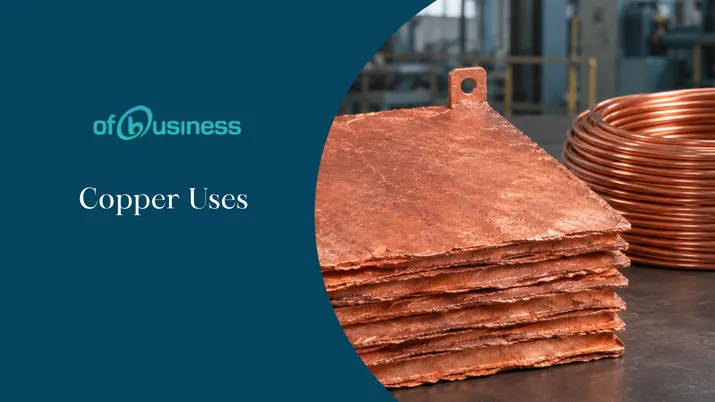
TL;DR: Copper is used in electrical wiring, motors, transformers, plumbing, heat exchangers and alloys because it conducts electricity and heat well and can be shaped into different forms. Industrial buyers should match the form to their production process. Buy cathode for melting, wire rod for drawing and finished wire, strip, bar or tube for fabrication.
Copper is used in power cables, motor windings, switchboards, plumbing fittings and heat exchangers. Each application calls for a different form of copper, from wire rod for drawing to tube for carrying fluids. OfBusiness is a B2B industrial procurement platform that connects buyers with verified suppliers. This guide explains where copper is used and what manufacturers and procurement teams should specify before buying.
Table of Contents
What Is Copper and Why Is It Used in Industry?
Copper is a non-ferrous metal that conducts electricity and heat well. Its ductility allows manufacturers to draw it into wire, and its formability makes it suitable for products such as strip and tube. Copper also combines with metals such as zinc and tin to produce alloys for specific applications.
These properties solve different production needs. A cable manufacturer needs a conductor that meets a specified electrical resistance. A heat exchanger manufacturer needs tubing that transfers heat and suits the operating fluid. A foundry making valves selects an alloy based on castability, machinability and service conditions.
What Are the Main Uses of Copper?
The main uses of copper include electrical conductors, motor and transformer windings, busbars, plumbing fittings, and heat transfer equipment. Manufacturers also use copper to produce brass and bronze components. The right product form depends on whether the buyer will melt, draw, roll, machine or assemble it.
| Application | Why copper is used | Typical purchase form | What to specify |
| Power cables and building wiring | High conductivity helps achieve the required electrical resistance within the specified conductor size. | Wire rod for drawing or finished wire and cable for installation | Rod diameter, conductor size and electrical resistance. Check IS 12444:2020 for electrical wire rod where applicable. |
| Motors and transformers | Copper can be drawn into wire or made into strip for compact windings. | Insulated winding wire or strip | Conductor dimensions, insulation system and electrical requirements. |
| Switchboards and control panels | Copper carries current through busbars and connects equipment through terminals. | Flat bar, strip or finished busbar | Grade, conductivity, dimensions and tolerances. Check IS 613 for electrical rods and bars where applicable. |
| Heat exchangers and condensers | Copper transfers heat efficiently between fluids in suitable operating conditions. | Copper or copper-alloy tube | Alloy, outside diameter, wall thickness and service conditions. Check IS 1545 where applicable. |
| Plumbing and refrigeration | Copper tube can be formed and joined for compatible piping systems. | Tube and fittings | Tube specification, wall thickness, pressure rating and compatibility with the fluid or refrigerant. |
| Valves, fittings and bearings | Copper alloys offer properties suited to casting, machining or wear resistance, depending on the grade. | Alloy ingot, casting stock or copper feedstock | Finished alloy grade, chemistry and mechanical requirements. |
Copper uses in renewable energy and electric vehicles
Solar and wind equipment use copper in cables, busbars, generators and transformers. Electric vehicles use it in motor windings, wiring harnesses and power connections. For procurement teams, the purchase specification comes from the component design. A motor maker may buy insulated winding wire, while a panel builder may need fabricated busbars.
Copper uses in brass and bronze production
Brass is based on copper and zinc. Common applications include valves, fittings and machined components. Tin bronze contains copper and tin and is used in products such as bushes and bearings. Foundries may use copper cathode or approved recycled feedstock to make an alloy, depending on the required melt chemistry.
Also read Aluminium vs Copper
How Do You Choose the Right Copper Form?
Choose the copper form that matches the first step in your production process. Buy cathode if your plant melts and casts copper. Buy wire rod if it draws wire. For direct fabrication or assembly, specify the wire, strip, bar or tube that meets the drawing and service conditions.
| Copper form | Typical buyer | Key purchase checks |
| Cathode | Rod mill or foundry with a melting line | Named grade, batch chemistry, bundle weight and producer details |
| Wire rod | Wire drawing unit or cable manufacturer | Diameter, conductivity, surface quality and coil weight |
| Wire or strip | Motor, transformer or component manufacturer | Dimensions, temper, conductivity and insulation where required |
| Bar or tube | Switchboard fabricator, heat exchanger maker or installer | Grade, dimensions, tolerances and applicable product standard |
| Graded copper scrap | Foundry or recycler with an approved process | Composition, contamination and expected usable metal recovery |
For example, a panel builder purchasing busbars should specify bar dimensions and conductivity. A mill supplying that bar needs a separate specification for its feedstock. Matching the purchase to the production step makes supplier quotes easier to compare.
What Determines the Cost of Copper for a Specific Use?
Copper cost depends on the product form, grade, dimensions, processing and delivery terms. A cathode quote includes the cost of refined feedstock. A wire, strip or tube quote also reflects the work needed to meet the finished specification. Compare landed quotes for the same product before approving an order.
The copper price per kg is a starting point. For a foundry comparing cathode with scrap, factor in sorting, melting losses and usable metal recovery. For a fabricator buying bar or tube, account for cut lengths, machining and offcuts. Check current product listings before requesting a quote.
Check Non-ferrous metal prices
Copper Procurement Checklist
Use the approved drawing or material specification to prepare your enquiry. Give each supplier the same requirements so differences in price, lead time and documentation are easy to identify.
- Specify the form and grade. Include dimensions, tolerances, quantity and the applicable Indian Standard or customer specification.
- Define the acceptance checks. State whether you need batch chemistry, conductivity, surface inspection or dimensional test results.
- Request traceable documents. Ask for the applicable test certificate and verify the Bureau of Indian Standards (BIS) licence where required.
- Compare delivered quotes. Confirm freight, taxes, quote validity, dispatch timing and any processing charges.
- Verify the material on receipt. Match bundle, coil or lot identifiers to the purchase order and test documents before releasing the material.
How Can You Source Copper Through OfBusiness?
Use the OfBusiness copper category to identify the product form your production line needs. Share the grade, dimensions, quantity and delivery location when requesting a quote. Confirm the supplier’s test documentation, dispatch terms and landed cost before placing the order.
Explore the OfBusiness copper category
Plants with a melting line can review copper cathode listings. Wire drawing units can compare copper wire rod listings against their input specifications. Eligible MSMEs can explore credit for recurring raw material purchases from Oxyzo Purchase Finance
Conclusion
Copper serves different roles in electrical equipment, fluid systems and alloy production. Start with the application, then specify the form, grade and acceptance tests. Request a grade-specific quote from OfBusiness and compare the delivered cost and batch documents before ordering.
Frequently Asked Questions
Copper combines high electrical conductivity with the ability to be drawn into wire. This helps manufacturers meet conductor resistance requirements across a range of sizes. For a finished cable, buyers should check conductor size, resistance, insulation and the applicable cable specification before ordering.
Copper cathode is refined feedstock supplied in plates. Mills can melt it to produce wire rod, bar or other intermediate forms. Foundries can also use it as a copper input for alloys. A wire drawing unit typically buys rod because its process starts with drawing.
Building projects use copper in electrical wiring, earthing, switchgear and some plumbing or heating systems. The required grade and product form depend on the installation. For procurement, use the approved electrical or plumbing schedule to confirm conductor size, tube dimensions, fittings and applicable product standards.
Yes. Recycled copper can be used when the feedstock and finished material meet the required specifications. A foundry may use approved scrap in an alloy charge. For electrical products, verify the finished material’s conductivity, chemistry and consistency through the documentation specified for the purchase.
Suggested Readings
Metals
MS Angle and Channel: Difference, Sizes & Weight
TL;DR: MS angle is an L-shaped steel section for bracing and light framing. MS channel is a C-shaped section that carries load across a span. Angles cost less to fabricate, while channels resist bending better. They are not interchangeable. This guide compares shape, weight, size, and cost, so fabricators and contractors can pick the right

Metals
ISMC Size Chart: MS Channel Weight per Meter, Sizes & Uses
TL;DR: MS channels come in standard ISMC sizes under IS 808, each with a fixed weight per meter that determines load capacity and material cost. ISMC 100 weighs 9.56 kg/m; ISMC 150 weighs 16.80 kg/m; ISMC 200 weighs 22.30 kg/m. This guide covers the full size chart, procurement checklist, and how to source verified MS
Metals
Mild Steel: Types, Grades, Properties, & B2B Procurement Guide
TL;DR: Mild steel is a low-carbon steel used across construction, manufacturing, and infrastructure. It comes in multiple product forms, from TMT bars and HR coils to structural sections and wire rods. This guide helps industrial buyers understand grades, select the right product form, and procure verified mild steel through OFB. MS — short for Mild