
Turkey Extends Russia-Ukraine Grain Export Agreement, Clearing Path For Trade Operations
In a significant development, the President of Turkey has announced the extension of the agreement for the export of grains between Russia and Ukraine. This agreement, primarily focused on maritime transportation, has been granted an additional 60 days. The decision to extend the agreement comes because of Turkey’s persistent efforts, support from Russian allies, and the cooperation of the Ukrainian government. Previously, the agreement was set to expire on 18 May 2023, but this extension ensures continuity in grain exports between the two countries. In this article, we will explore more about the same.
Brief Overview
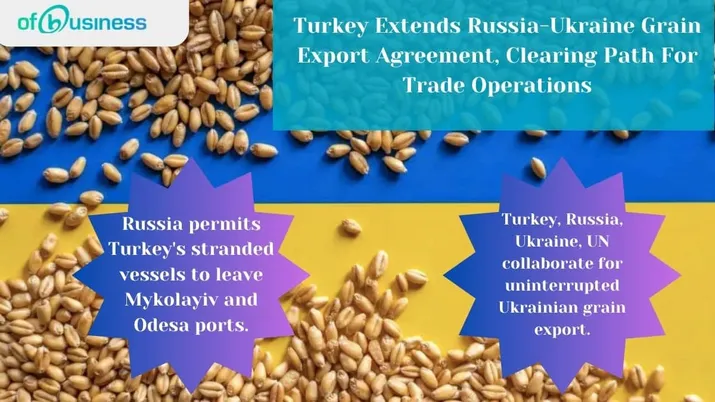
- Turkish Vessels Receive Clearance– One of the crucial aspects of this extension is that Turkey has received permission from Russia for its vessels stranded at the ports of Mykolayiv and Odesa to depart. This marks a significant development as Russian authorities had previously prohibited these vessels from leaving the ports. With this newfound approval, around 10 Turkish vessels can now proceed with their journeys. Turkey expresses its gratitude to Russia for this favourable decision, as it allows for the smooth operation of trade and relieves the concerns of Turkish shipowners.
- Joint Efforts– The President of Turkey has emphasized the collaborative nature of this agreement, involving multiple parties such as Russia, Ukraine, the United Nations, and Turkey. All parties are committed to working together to ensure the fulfilment of the agreement’s conditions. By maintaining a cooperative approach, the aim is to avoid any difficulties in extending the time limit further and ensuring the uninterrupted export of Ukrainian grain.
- Trade Relations– Analysts speculate that Russia’s willingness to extend the agreement for 60 days may be attributed to its interest in supporting the current President of Turkey during the upcoming elections. The agreement with Ukraine is seen as an important achievement for the Turkish president, and Russia’s acceptance of the extension highlights their cooperation. As the elections approach, maintaining stable trade relations and fulfilling commitments becomes even more crucial, potentially influencing the political landscape in Turkey.
Market Outlook
The agreement extension for Ukrainian grain exports brings relief to both Turkish and Ukrainian stakeholders involved in the trade. With Turkish vessels now permitted to leave Ukrainian ports, the potential disruptions caused by the stranded ships will be resolved. The commitment of all parties to continue working together signifies a positive outlook for the future of this agreement.
OFB’s Insight
The extension announcement of the agreement for Ukrainian grain export by the President of Turkey marks an important development in the ongoing trade relationship between Russia and Ukraine. With the granting of clearance to Turkish vessels stranded in Ukrainian ports, the potential risks to trade operations have been mitigated. The collaborative efforts of all involved parties pave the way for the smooth continuation of grain exports and underline the importance of international cooperation in maintaining trade stability.
For real time commodity prices, latest news, and insights, please download the all NEW and all FREE OfBusiness APP.
Suggested Readings
Parmal Rice vs Basmati Rice – Nutrition, GI and Health Benefits of Indian Varieties
TL;DR: Parmal rice is a non-aromatic, protein-rich variety from Punjab and Haryana with a low glycemic index — making it a practical choice for everyday health-conscious consumption. Basmati offers balanced amino acids, superior aroma, and a medium GI. Indrayani supports digestive health and carries a medium GI. This guide covers the nutritional profiles and GI
Edible Oil Importers in India: Duties, Supply and Industry Outlook
TL;DR: India’s vegetable oil imports fell 29% year-on-year in June 2026, but cumulative imports between November 2025 and June 2026 remained 6% higher. Lower domestic stocks, slower oilseed crushing and festive-season demand may support stronger imports in the coming months. Palm oil remains India’s largest imported edible oil, while India soybean oil imports have increased
8 Products Extracted From Sugarcane (Apart From Sugar And Ethanol)
Sugarcane is an incredibly versatile crop, there is a reason why it has been cultivated for thousands of years. It's one of the most popularly cultivated crops across the world, with over 80 countries cultivating it. Part of the reason for its success is its vast array of products that are made from sugarcane. Sugar and ethanol are two products derived from sugarcane and these two products are well known. But that’s not it. There are other products derived from sugarcane as well. In this article, we will describe other derived products derived from sugarcane as well.