
Chinese Steel Market Recovery: Opportunities And Risks

The Chinese steel market has experienced recovery over the week, with improvement in spot and futures steel prices. This positive trend can be attributed to the macroeconomic rebound and the peak consumption season. However, there are also potential dangers for the futures market if the price increases too quickly.
Domestic Demand
The Chinese government has emphasized the importance of recovering consumer spending and increasing domestic demand as a top priority this year. Encouraging consumption may be the main engine of economic expansion. The steel industry’s downstream sectors, especially construction, are also recovering. The Yangtze River Delta region’s ongoing projects have significantly improved year over year, boosting the overall steel sector.
Automobile Sector And Downstream Finished Goods
The automobile sector has experienced a cycle of price reduction promotions on the downstream side, with several auto brands recently launching campaigns to reduce prices for a short time. The efficient destocking of downstream finished goods is also significant in supporting steel output and growth in demand.
Inventory And Demand
In the steel sector, the February 2023 spike in supply did not exert pressure on the inventory. Instead, the inventory indicated an inflection point and dropped due to increasing demand. The steel stockpile in 29 important Chinese cities was 15.5709 million tons on 10 March 2023, down 398,200 tons from the previous week and down 2.5% week over week. Rebar and hot-rolled inventory have also experienced a decrease, indicating a rise in demand.
Insight
Steel mills have raised prices over the last two days to account for the rise in the cost of raw materials. Yet, the peak in steel demand has not yet been reached, and policies to stabilize the real estate sector since the second part of last year has also started to show results. While there is still a basis for steel prices to climb due to improved supply and demand, it is crucial to consider the effects of variations in iron ore prices. The steel market recovery presents opportunities for growth, but it is important to proceed with caution to avoid risks.
Read more: Indian Silicon Manganese Market: Change In Demand Affects Prices
Suggested Readings

MS Angle and Channel: Difference, Sizes & Weight
TL;DR: MS angle is an L-shaped steel section for bracing and light framing. MS channel is a C-shaped section that carries load across a span. Angles cost less to fabricate, while channels resist bending better. They are not interchangeable. This guide compares shape, weight, size, and cost, so fabricators and contractors can pick the right

ISMC Size Chart: MS Channel Weight per Meter, Sizes & Uses
TL;DR: MS channels come in standard ISMC sizes under IS 808, each with a fixed weight per meter that determines load capacity and material cost. ISMC 100 weighs 9.56 kg/m; ISMC 150 weighs 16.80 kg/m; ISMC 200 weighs 22.30 kg/m. This guide covers the full size chart, procurement checklist, and how to source verified MS
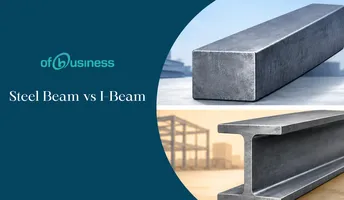
Steel Beam vs I-Beam: Structural Differences Explained
TLDR: Steel beam vs I-beam is a key comparison in construction, affecting strength, cost, and design. This guide explains structural differences, I-beam vs H-beam, beam dimensions, and standard I-beam sizes with charts. Understand steel beam vs I-beam clearly to choose the right section for better load performance and efficient material use. The comparison between steel

