
Will China's Massive Cotton Yarn Order Revive India's Textile Industry?
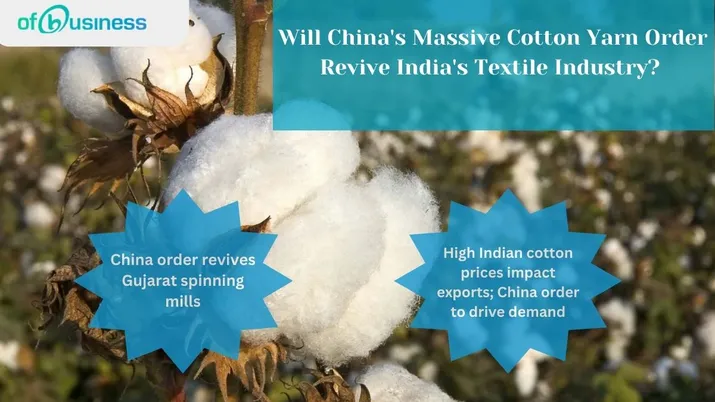
Xinjiang province in China produces over 70% of the country’s total cotton production. However, the province has faced lower cotton crop production in 2023, resulting in China placing a large order for cotton yarn from India. China’s recent order of nearly 5,000 tons of cotton yarn from India has sent ripples across the textile industry. Here’s what you need to know:
Impact On India
- Production Boost- The latest order from China is expected to boost the Gujarat-based spinning mills, which were undergoing idling due to low demand. The state’s spinning mills are expected to fulfil most of the orders within the next two months.
- Price & Export Demand- Indian cotton prices have remained higher than international prices for almost a year, leading to a drop in cotton yarn exports. The recent order from China is expected to reverse this trend and improve the country’s export demand.
Market Outlook
According to industry estimates, India’s cotton production in 2023 will be around 34 million bales. Cotton rates are estimated to be around Rs 55,000 per candy level. Additionally, yarn rates are estimated to fall to Rs 245 per kg from Rs 255 per kg (current price). This drop in yarn prices is expected to lead to increased export demand for India as prices become more aligned with international rates.
OFB’s Insight
China’s recent order of cotton yarn from India is a positive development for the textile industry, which was experiencing a slump due to low demand. This order is expected to provide a much-needed boost to the spinning mills in Gujarat and improve the country’s export demand. With the predicted drop in yarn prices, India is likely to witness a surge in export demand, leading to a much-needed revival of the textile industry.
Read more: India’s Soybean Supply Skyrockets! Will The Upcoming Harvest Season Push The Growth Forward?
For real time commodity prices, latest news, and insights, please download the all NEW and all FREE OfBusiness APP.
Suggested Readings

Empowering SMEs in the Leather and Footwear Industry
India accounts for nearly 13% of the world’s leather production. The industry handles an annual production of about three bn sq. ft. of Leather, and it is one of the top foreign exchange earners for the country. The major drivers of the leather sector in India include the footwear and fashion industry. Although India has an abundance of

Non-Ferrous Metal: Meaning, Types, Properties, and Industrial Applications
A non-ferrous metal is a metal or alloy that does not contain iron as its main element. It resists red rust and often weighs less than steel. Aluminium, copper, zinc, lead and tin are common examples. This guide covers their meaning, list, properties, alloys and uses, and compares them with ferrous metals. It is written
Can Rising Cotton Prices In India Overcome Global Textile And Apparel Consumption Challenges?
In recent times, the Indian cotton market has been facing challenges due to low arrivals and a slow recovery in textile and apparel consumption. However, despite these obstacles, the market has shown resilience, with Indian cotton prices remaining firm and even showing an uptrend. The government’s efforts to support downstream capacity expansion and favourable economic